Ultrasound vs. X-Ray: Discover How They Differ for Diagnosis
Ultrasound vs. X-Ray: Discover How They Differ for Diagnosis
Ultrasound vs. X-Ray: Decoding Their Unique Roles in Medical Imaging and Choosing the Right Scan in Dubai
Which imaging technique offers minimal radiation while vividly showing soft-tissue dynamics, and when is an X-ray absolutely crucial for bone assessment? Patients and healthcare providers often ponder the key distinctions between ultrasound and X-ray for diagnostic purposes. This comprehensive guide will illuminate how ultrasound harnesses high-frequency sound waves for superior soft-tissue visualization, how X-ray utilizes ionizing radiation for precise bone imaging, and what each method brings to the table regarding safety, accessibility, and affordability within Dubai’s medical landscape. We’ll delve into the underlying technologies, compare their clinical applications, explore safety considerations, break down pricing with clear insights into Lab Tests Dubai’s offerings, highlight recent technological advancements, and address common patient queries to empower you in confidently selecting and scheduling your next radiology service.
Understanding Ultrasound and X-Ray Scans: The Core Technologies at Play
Ultrasound and X-ray scans are indispensable diagnostic imaging procedures that reveal internal body structures by employing distinct physical principles—sound wave propagation versus electromagnetic radiation. Grasping each mechanism is key to making the optimal choice for specific medical needs and ensuring patient well-being.
How Ultrasound Leverages Sound Waves for Soft-Tissue Imaging
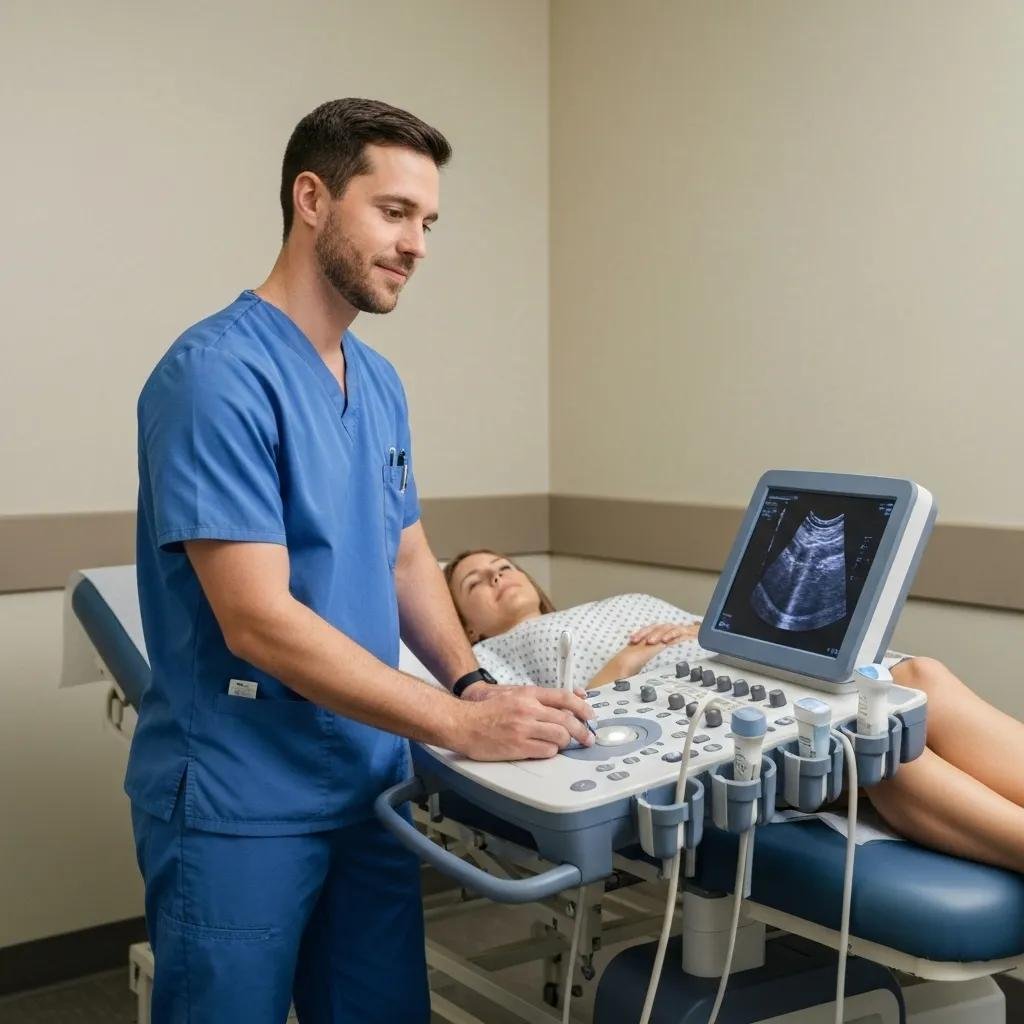
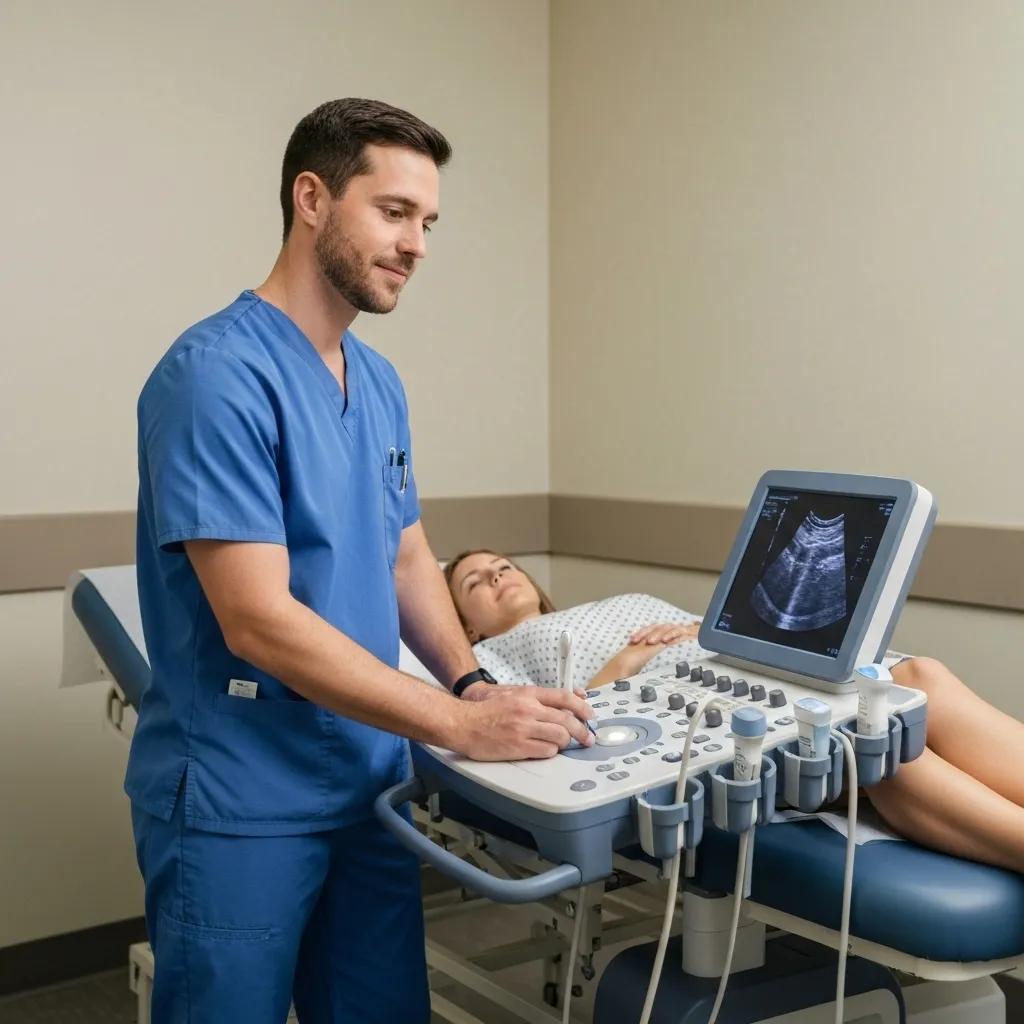
Ultrasound employs high-frequency sound waves, emitted and received by a handheld transducer, to generate dynamic, real-time images of soft-tissue structures. This approach allows for functional assessments without exposing patients to ionizing radiation. As the transducer sends out sound pulses, these waves bounce off tissue interfaces, creating echoes that are captured and translated into cross-sectional views of organs, muscles, and blood vessels. This technology is invaluable for visualizing fetal development, abdominal organs, and musculoskeletal injuries. Its real-time imaging capability also aids in guiding medical procedures and performing Doppler blood-flow analysis, directly linking anatomical structures with their functional status.
Building on this dynamic imaging approach, contrasting it with static imaging clarifies why X-ray remains the go-to for bone evaluations.
How X-Ray Uses Ionizing Radiation to Visualize Bones and Dense Tissues
X-ray utilizes ionizing electromagnetic waves that pass through soft tissues more easily than dense materials. Denser tissues, such as bone, absorb more radiation, resulting in a high-contrast image. A controlled X-ray beam is directed through the body, and the varying degrees of absorption are captured on a digital detector or film, producing detailed skeletal images. This high-resolution, static imaging is essential for detecting fractures, performing dental evaluations, and examining the chest. While any exposure to radiation carries a minimal risk, modern equipment is meticulously designed to optimize radiation doses, striking a balance between diagnostic benefit and patient safety.
Understanding static image capture now sets the stage for comparing both modalities in terms of their temporal resolution and range of applications.
Key Differences: Real-Time Imaging vs. Static Capture
- Temporal Resolution → Continuous Visualization → Ultrasound provides uninterrupted views of moving structures, enabling functional assessments and guiding interventions.
- Image Capture → Instantaneous Images → X-ray generates single-shot static images, perfect for detailed examination of bone structure.
- Application Scope → Dynamic Function vs. Static Structure → Ultrasound excels in vascular studies and observing soft-tissue movement, while X-ray is superior for skeletal surveys and identifying dense-tissue abnormalities.
The fundamental difference between real-time observation and single-moment capture highlights why each modality serves distinct diagnostic objectives.
Core Differences Between Ultrasound and X-Ray in Diagnostic Imaging
A comparison of ultrasound and X-ray across key attributes reveals their complementary strengths in delivering effective healthcare.
Safety and Radiation Exposure: Ultrasound vs. X-Ray
Ultrasound is inherently free from radiation, making it the preferred choice for vulnerable patient groups, including pregnant women and children.
Ultrasound Safety During Pregnancy – en
Ultrasound is recognized as a safe imaging method for expectant mothers as it does not involve ionizing radiation. This makes it the preferred option for monitoring fetal development and assessing the health of both mother and baby throughout pregnancy, minimizing any potential risks.
American College of Obstetricians and Gynecologists, Ultrasound in Pregnancy (2023)
This authoritative source reinforces the article’s assertion regarding the safety of ultrasound, particularly in the context of prenatal care.
Conversely, X-ray employs low-dose ionizing radiation, with exposure levels meticulously managed through advanced detector technology and stringent safety protocols.
X-Ray Radiation Risks and Mitigation Strategies – en
Medical X-ray imaging utilizes ionizing radiation, which carries a minor risk of cellular damage. However, contemporary X-ray systems and established protocols are engineered to minimize radiation exposure. This is achieved through the use of digital detectors, sophisticated dose modulation software, and protective shielding, ensuring that diagnostic benefits are prioritized while maintaining patient safety.
National Institute of Biomedical Imaging and Bioengineering, Radiation Safety in Medical Imaging (2024)
Ultrasound’s lack of radiation risk significantly enhances patient safety, while X-ray’s carefully controlled doses deliver high-resolution bone detail with an acceptable benefit-risk ratio, adhering to clinical guidelines.
Both safety profiles are crucial factors in selecting the appropriate imaging modality based on individual patient circumstances and the specific diagnostic questions being addressed.
Primary Clinical Applications for Ultrasound and X-Ray
The primary clinical uses of each modality clearly demonstrate how they address specific anatomical and functional health concerns:
- Pregnancy Monitoring → Assessing Fetal Growth and Well-being → Ultrasound
- Abdominal Health → Evaluating Gallbladder, Liver, and Spleen → Ultrasound
- Vascular Health → Detecting Blood Clots and Flow Issues → Ultrasound
- Bone Integrity → Identifying Fractures and Dislocations → X-Ray
- Respiratory Health → Diagnosing Pneumonia and Lung Conditions → X-Ray
- Dental Health → Examining Teeth and Jaw Structure → X-Ray
These common applications highlight why soft-tissue and functional assessments are best served by ultrasound, whereas skeletal and dense-structure evaluations are the domain of X-ray imaging.
Cost and Accessibility: Comparing Ultrasound and X-Ray Services in Dubai
The availability and cost of diagnostic imaging services can vary depending on the specific facility and the complexity of the procedure. The following table provides a general overview of typical price ranges and practical access considerations within Dubai’s healthcare environment.
Approximately ninety percent of patients find one modality to be more cost-effective or convenient, depending on their specific medical needs, which influences their choice of scan.
| Imaging Modality | Estimated Cost Range (AED) | Typical Appointment Lead Time | Portability |
|---|---|---|---|
| Ultrasound | 200 – 600 | Immediate to 48 hours | High (portable units available) |
| X-Ray | 100 – 400 | Immediate to 24 hours | Moderate (typically fixed room-based) |
Lab Tests Dubai is committed to transparent pricing and flexible scheduling, ensuring timely access and clear expectations for both ultrasound and X-ray services.
Advantages and Limitations of Each Imaging Modality
A balanced perspective is essential for optimizing diagnostic strategies:
- Ultrasound Strengths: Radiation-free soft-tissue imaging, real-time motion analysis, highly portable equipment.
- Ultrasound Weaknesses: Limited ability to penetrate bone, image quality can be operator-dependent, restricted field of view in certain areas.
- X-Ray Strengths: Superior high-resolution static imaging of bone, rapid scan acquisition, widespread availability.
- X-Ray Weaknesses: Involves ionizing radiation exposure, less effective for soft-tissue contrast, provides a two-dimensional view.
Understanding these distinct advantages and limitations helps clinicians and patients make informed decisions about the most appropriate imaging pathway.
Choosing Between Ultrasound and X-Ray: Clinical Scenarios and Patient Factors
Selecting the optimal diagnostic scan depends on the patient’s symptoms, safety considerations, and the specific diagnostic goals.
When Ultrasound is the Preferred Diagnostic Choice
- Pregnancy Care → Safely visualizing fetal development without radiation exposure.
- Abdominal Discomfort → Assessing conditions like gallstones, liver abnormalities, or appendicitis.
- Soft-Tissue Injuries → Identifying tendon tears, ligament damage, or soft-tissue masses.
- Vascular Health Concerns → Measuring blood flow in arteries and veins to detect blockages or abnormalities.
These scenarios highlight how ultrasound’s safety profile and functional imaging capabilities are leveraged effectively.
When X-Ray is Essential for Accurate Diagnosis
- Fracture Identification → Pinpointing bone breaks, assessing displacement, and evaluating alignment.
- Arthritis Assessment → Visualizing joint space narrowing and the formation of bone spurs.
- Chest Conditions → Detecting signs of pneumonia, heart enlargement, or the presence of foreign objects.
- Dental Problems → Examining tooth structure, identifying impacted teeth, and assessing jawbone integrity.
These applications rely on X-ray’s ability to provide high-contrast, static images of dense tissues.
When Both Ultrasound and X-Ray are Recommended Concurrently
- Trauma Cases → X-ray to rule out bone fractures, followed by ultrasound to assess soft-tissue injuries like hematomas.
- Abdominal Pain Investigations → Ultrasound to identify gallstones, complemented by X-ray to exclude calcifications or bowel obstructions.
- Complex Obstetric Situations → Ultrasound for ongoing fetal monitoring, potentially combined with X-ray if pelvic bone integrity needs assessment following trauma.
Combining these imaging modalities offers a more comprehensive view, integrating both anatomical and functional diagnostic insights for complete patient care.
Safety Profiles of Ultrasound and X-Ray Scans: Understanding Radiation and Patient Risks
Prioritizing patient safety is paramount; understanding potential risks and protective measures facilitates informed decision-making.
Why Ultrasound is Considered Radiation-Free and Safer for Pregnant Women and Children
Ultrasound operates using mechanical sound waves that do not ionize tissues or damage DNA, thereby eliminating any long-term radiation-related risks. This radiation-free characteristic makes ultrasound the ideal choice for fetal assessments, pediatric abdominal examinations, and any follow-up studies requiring repeated imaging, as it avoids cumulative radiation exposure concerns.
Recognizing this inherent safety advantage underscores ultrasound’s critical role in safeguarding the health of vulnerable patient populations.
Radiation Risks with X-Ray and How They Are Minimized
X-ray imaging involves low-dose ionizing radiation, which, if not managed correctly, can potentially cause cellular damage. However, modern digital detectors, sophisticated dose-modulation software, and strict shielding protocols are employed to reduce radiation exposure to the lowest achievable levels. Radiology professionals conduct thorough risk-benefit analyses to ensure that the diagnostic value of the scan significantly outweighs any minimal radiation risk.
These essential precautions ensure patient protection while enabling the crucial diagnostic information provided by bone and chest imaging.
Essential Precautions for Patients Undergoing These Scans
- Remove all metallic items and jewelry before undergoing X-ray scans.
- Refrain from eating or drinking for several hours if an abdominal ultrasound has been scheduled.
- Always inform the imaging technologist if you are pregnant or have any implanted medical devices.
- Wear comfortable, loose-fitting clothing to your ultrasound appointment for ease of access and comfort.
Adhering to these preparation guidelines is vital for ensuring accurate diagnostic results and a comfortable patient experience.
Cost of Ultrasound and X-Ray Services in Dubai: Transparent Pricing and Insurance Insights
Access to clear cost information empowers patients to budget effectively for their healthcare needs and explore available insurance coverage options.
Factors Influencing the Cost of Ultrasound and X-Ray Scans
The final price of a diagnostic scan is influenced by several factors, including the specific type of procedure, the anatomical area being examined, the potential use of contrast agents, the operational costs of the facility, and the reimbursement policies of insurance providers. Specialized protocols for high-risk patients or advanced imaging techniques may also contribute to higher fees. Understanding these variables allows for more precise financial planning for diagnostic testing.
How Lab Tests Dubai Ensures Affordable and Transparent Pricing
Lab Tests Dubai is committed to a straightforward pricing model with absolutely no hidden charges. We provide upfront cost estimates for every ultrasound and X-ray procedure. Our flexible payment options, assistance with insurance claims, and periodic promotional offers further enhance the accessibility of our high-quality imaging services, ensuring you receive expert care without unexpected expenses.
Where to Book Ultrasound and X-Ray Diagnostic Tests in Dubai
Scheduling your radiology tests in Dubai is designed to be simple and patient-focused. You can book appointments directly through our call center, by completing our online request forms, or by visiting our facility for walk-in registration. We ensure that appointments are conveniently scheduled to align with your individual needs and timeline. Our team of expert radiologists and state-of-the-art equipment guarantee accurate diagnostic results with prompt turnaround times.
Latest Advances in Ultrasound and X-Ray Technology: Enhancing Accuracy and Patient Experience
Continuous innovation in medical imaging leads to improved diagnostic outcomes and enhanced patient comfort.
Advancements in 3D/4D Ultrasound and Elastography
Three-dimensional and four-dimensional ultrasound technologies create detailed volumetric views of anatomy and capture real-time motion, significantly improving structural assessments and fetal diagnostics. Elastography introduces the ability to measure tissue stiffness, aiding in the early detection of fibrosis or malignancy by adding functional data to traditional grayscale imaging.
These advanced techniques boost diagnostic confidence and patient engagement through clearer, more comprehensive visualizations.
Innovations in Digital X-Ray and AI for Bone Imaging
Modern digital X-ray systems now offer enhanced spatial resolution while simultaneously reducing radiation doses. Furthermore, artificial intelligence (AI) algorithms are increasingly used to assist in automated fracture detection, precise bone density measurements, and optimizing workflow efficiency. AI-driven image enhancement and decision support tools streamline the interpretation process for radiologists, leading to faster diagnoses.
Collectively, these technological leaps improve both the accuracy and efficiency of skeletal assessments.
The Impact of Tele-Radiology and AI on Diagnostic Imaging Services in Dubai
Tele-radiology networks connect local healthcare facilities with specialized radiologists across the globe, facilitating rapid expert consultations and second opinions. AI-powered systems are revolutionizing workflow management and image triage, accelerating the reporting of emergency cases and the review of routine scans. These integrated technologies expand access to specialized medical expertise and support ongoing quality improvement initiatives.
The adoption of remote collaboration and AI-driven decision support tools underscores Dubai’s commitment to providing cutting-edge diagnostic care.
Frequently Asked Patient Questions About Ultrasound and X-Ray: FAQs on Safety, Uses, and Booking
Patients often seek clear, straightforward answers to help them make informed decisions about their imaging procedures.
What is the Primary Distinction Between Ultrasound and X-Ray?
Ultrasound utilizes sound waves to generate real-time images of soft tissues without using radiation, whereas X-ray employs ionizing radiation to produce static images primarily of bones and dense structures.
In Which Situations is Ultrasound Preferable to X-Ray?
Ultrasound is the superior choice for evaluating soft-tissue anatomy, monitoring pregnancies, and assessing blood flow, particularly when minimizing radiation exposure is a critical concern.
Is Ultrasound Generally Safer Than X-Ray?
Yes, ultrasound is typically considered safer because it does not involve ionizing radiation, making it the ideal choice for pregnant women, children, and for patients requiring frequent follow-up imaging.
What Can X-Ray Detect That Ultrasound Cannot?
X-ray excels at detecting subtle bone fractures, calcifications, and changes in joint spaces with exceptional resolution, details that are often obscured by dense bone on ultrasound imaging.
How Should I Prepare for an Ultrasound or X-Ray Scan?
Preparation protocols vary by examination type. Fasting may be required for abdominal ultrasounds, while X-ray scans typically necessitate the removal of metal objects and wearing comfortable, loose clothing.
How Do I Schedule an Ultrasound or X-Ray Test in Dubai?
Booking your diagnostic tests is convenient with Lab Tests Dubai’s patient-centric services: simply call our center, submit an online request form, or register in person. We ensure a seamless appointment process tailored to your specific medical needs.
Ultrasound and X-ray stand as two fundamental pillars of diagnostic imaging, each expertly designed for distinct anatomical and functional insights. By carefully aligning clinical indications and patient considerations with the safety profiles, cost structures, and technological capabilities of each modality, you can confidently select the most effective diagnostic scan. Lab Tests Dubai is dedicated to providing transparent pricing, flexible booking options, and expert radiology interpretation to support you at every stage of your healthcare journey. Trust in our precise imaging services to enhance diagnostic confidence and guide you toward optimal health outcomes.