

Insulin Resistance Profile
450,00 د.إ
The Insulin Resistance Profile offers a dynamic, multi-dimensional view. It measures your insulin levels.
Turnaround Time: 1 Day
Includes 3 Parameters:
- Insulin (Fasting)
- Insulin (1 Hour)
- Insulin (Postprandial)
Description
Insulin Resistance Profile: A Comprehensive Guide to Assessing Diabetes and Metabolic Risk
Introduction: The Silent Metabolic Saboteur
You eat right, you exercise, yet the scale refuses to budge. You feel exhausted by mid-afternoon, craving sugar with a ferocity that feels almost primal. If this sounds familiar, you aren’t failing your diet, your hormones might be failing you.
Behind the scenes of every bite you eat, a complex hormonal dance occurs. When this dance goes awry, it leads to a condition known as insulin resistance. Unfortunately, standard blood sugar tests often miss this condition in its early stages.
This is where the Insulin Resistance Profile comes in. It is the gold standard for looking beyond simple glucose numbers to understand how your body actually metabolizes energy. For anyone serious about longevity, weight management, and preventing chronic disease, this test is not just an option, it is essential.
What is an Insulin Resistance Profile?
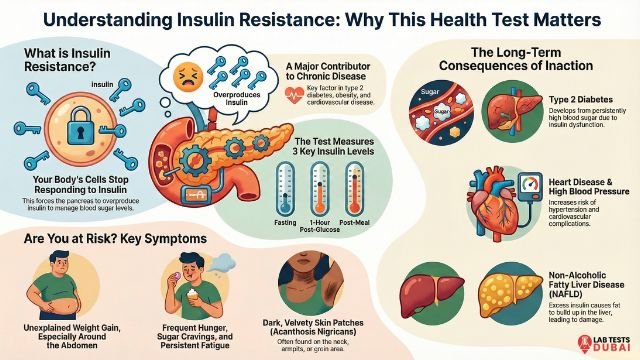
While a standard glucose test measures the amount of sugar in your blood at a single moment, the Insulin Resistance Profile offers a dynamic, multi-dimensional view. It measures your insulin levels at three critical stages:
- Fasting Insulin: Your baseline hormone levels after not eating.
- 1-Hour Insulin: How your body responds immediately to a glucose load (the spike).
- Postprandial Insulin: How well your body clears insulin after a meal.
By capturing these fluctuations, the test identifies exactly when your pancreas is overworking to compensate for sluggish cells. It is the ultimate tool for diabetes risk assessment, catching metabolic dysfunction years before a standard diabetes diagnosis would occur.
Who Needs This Test? (Recognizing the Red Flags)
Insulin resistance is often a “silent” condition, but it leaves clues. Experience shows that patients often ignore these symptoms for years, attributing them to aging or stress. You should consider this profile if you are experiencing:
- The “Middle-Age Spread”: Unexplained weight gain focused specifically around the abdomen.
- The Energy Crash: Fatigue and brain fog that hits shortly after eating, especially carb-heavy meals.
- Skin Changes: The appearance of dark, velvety patches of skin, known as Acanthosis Nigricans, usually around the neck or armpits. This is a definitive physical sign of insulin resistance.
- Hormonal Imbalance: Women with PCOS (Polycystic Ovary Syndrome) often struggle with insulin resistance, which drives symptoms like irregular cycles and acne.
- The “Hangry” Phenomenon: Frequent hunger and sugar cravings that feel impossible to ignore.
The Science: Why Measuring Insulin Matters
To understand the importance of this test, we need to look at the physiology. Expertise in endocrinology tells us that insulin acts as a “key” that unlocks cells to let glucose in.
In a healthy body, a small amount of insulin opens the lock. In an insulin-resistant body, the “lock” is jammed. The pancreas responds by pumping out massive amounts of insulin to force the cells open.
- Fasting Insulin: If this is high, your pancreas is already working overtime just to maintain baseline sugar levels.
- 1-Hour & Postprandial Levels: If these spike too high or take too long to come down, your metabolic flexibility is compromised.
This test reveals the effort your body is expending, which is often the first sign of trouble.
The Dangers of the “Wait and See” Approach
Ignoring insulin resistance is akin to ignoring a slow leak in a dam. Eventually, the pressure becomes too great. Untreated insulin resistance is a primary driver of:
- Type 2 Diabetes: The pancreas eventually burns out, and blood sugar skyrockets.
- Cardiovascular Disease: High insulin damages blood vessels and leads to hypertension.
- Non-Alcoholic Fatty Liver Disease (NAFLD): Excess insulin signals the liver to store fat, leading to inflammation and potential liver failure.
- Chronic Inflammation: Insulin resistance is pro-inflammatory, accelerating aging and cognitive decline.
How to Prepare for Accurate Results
To ensure your Insulin Resistance Profile provides reliable data, proper preparation is non-negotiable.
- The Fasting Protocol: You must fast for 8 to 12 hours before the test. Water is permitted and encouraged for hydration, but coffee, tea, or food will alter the baseline.
- The Night Before: Avoid high-sugar or high-carbohydrate meals the evening before the test. We want to see your typical metabolic response, not a reaction to a “cheat meal.”
- Medication Review: Be transparent with your doctor about any supplements or medications, particularly those that influence blood sugar.
Conclusion: Reclaim Your Metabolic Health
You do not have to be a prisoner to sugar cravings, fatigue, or unexplained weight gain. The Insulin Resistance Profile provides the data you need to take back control.
Whether you are managing PCOS, trying to lose weight, or simply prioritizing preventative health, this test offers the clarity that standard panels miss. Early detection is not just about avoiding disease; it is about optimizing the quality of your life today.
Order your Insulin Resistance Profile today and get the answers your body has been waiting for.
Insulin Resistance Profile – Frequently Asked Questions
1. What is the Insulin Resistance Profile?
The Insulin Resistance Profile is a blood test panel that measures insulin, glucose, and related markers to evaluate how effectively your body responds to insulin. It helps detect early signs of insulin resistance and metabolic dysfunction.
2. Why is this test important?
Insulin resistance is a major risk factor for prediabetes, type 2 diabetes, weight gain, fatty liver, high cholesterol, and metabolic syndrome. Early detection allows for lifestyle changes and medical intervention before complications develop.
3. What markers are included in the test?
The test typically analyzes fasting insulin, fasting glucose, and calculated indices such as HOMA-IR to assess your metabolic health.
4. Do I need to fast before taking the test?
Yes, fasting for 8–12 hours is required to ensure accurate insulin and glucose measurements.
5. What symptoms may indicate insulin resistance?
Common symptoms include fatigue, cravings, difficulty losing weight, dark patches on the skin (acanthosis nigricans), brain fog, and increased waist size.
6. How long does it take to get the results?
Results are usually available within 24–48 hours depending on lab processing times.
7. Can I reverse insulin resistance if detected early?
Yes. Through diet adjustments, weight management, physical activity, and medical guidance, many people successfully reverse or significantly reduce insulin resistance.
8. Is this test recommended for people without symptoms?
Yes. Even without symptoms, individuals with a family history of diabetes, obesity, PCOS, or metabolic syndrome can benefit from early screening.
9. Is this test suitable for people with PCOS?
Absolutely. Insulin resistance is very common in PCOS and this test helps guide treatment and lifestyle recommendations.
10. Can I take this test at home?
Yes. LabTestsDubai.com provides professional at-home blood collection services across Dubai and the UAE for maximum convenience.



Reviews
There are no reviews yet.