

Zika Virus Serology
800,00 د.إ
Zika virus serology is a blood test that looks for specific antibodies to Zika virus.
Sample Type : Serum
Methodology : Enzyme-immunoassay
TAT : 14 Days
Description
Zika Virus Serology Test
If you’ve ever traveled to a tropical destination and come back with a strange low-grade fever, rash, or red eyes, you probably didn’t think much of it at the time.
“Just a virus,” you told yourself. “It will pass.”
But for some viruses, that “just a virus” phase is only the beginning.
Zika virus is exactly that kind of infection. For many people, it’s mild or even silent. For others, especially pregnant women and their babies, the consequences can be severe. And unlike a simple flu, Zika doesn’t just leave your system and disappear from your medical record, it can leave an immune footprint that matters for months or years to come.
That’s where the Zika Virus Serology test comes in.
It doesn’t detect the virus itself. It detects the antibodies your body produced in response to it, evidence that your immune system has seen Zika before.
Here’s what the test actually measures, who needs it, and why it matters long after the symptoms are gone.
What Is Zika Virus Serology?
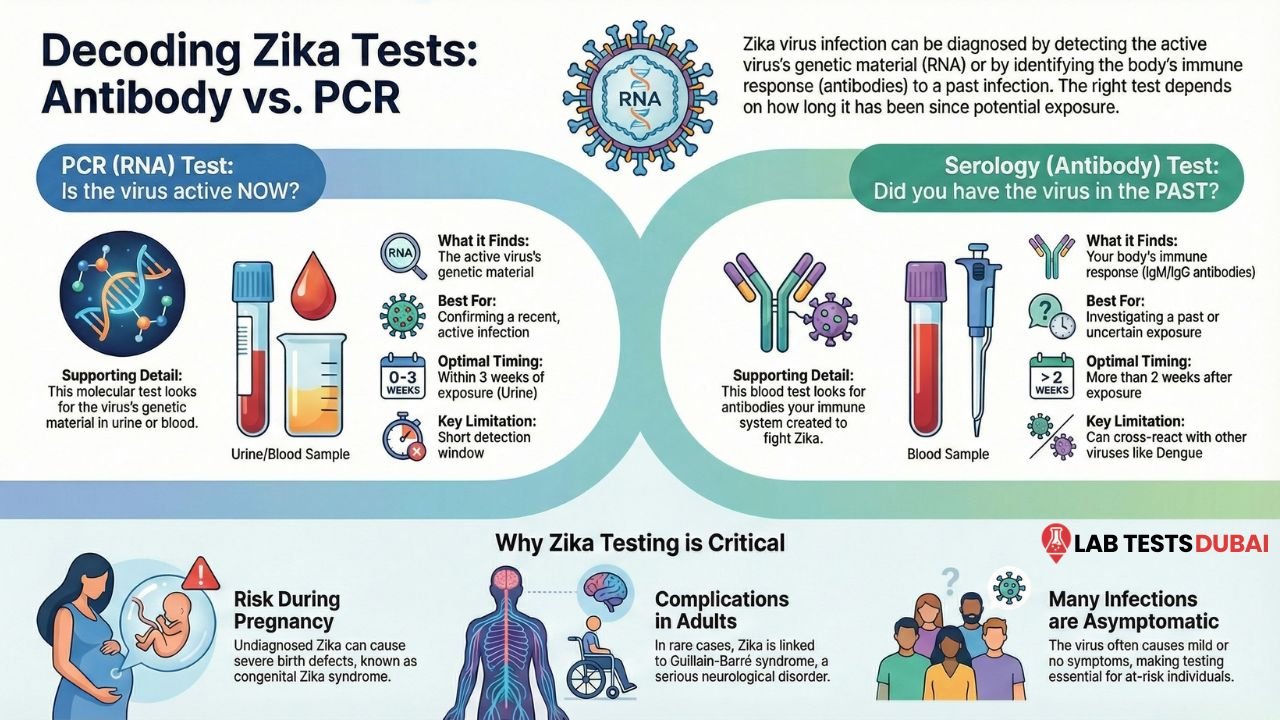
Zika virus serology is a blood test that looks for specific antibodies to Zika virus:
- IgM antibodies: typically appear within days to a few weeks after infection and indicate recent exposure.
- IgG antibodies: develop later and usually suggest past infection or long-term immunity.
Laboratories commonly use enzyme immunoassays (ELISA) to detect these antibodies in serum.
This is different from PCR (molecular) testing, which looks for the virus’s genetic material and is most useful in the first couple of weeks after infection. Serology is generally used when:
- It’s been more than two weeks since symptoms or possible exposure, or
- Clinicians need to assess whether an infection occurred in the past (for example, during a specific window of pregnancy).
In other words: PCR tells you if the virus is still there; serology tells you if your body remembers seeing it.
Why This Test Exists
Zika may feel like “just another mosquito-borne virus,” but two factors make it uniquely important:
- Pregnancy and congenital Zika syndrome
Zika infection during pregnancy can cross the placenta and affect the developing fetus. It has been linked to:
- Microcephaly (small head and brain size)
- Severe brain abnormalities
- Eye defects
- Hearing problems
- Joint and muscle contractures
Together, these and other findings are referred to as congenital Zika syndrome
Because of these risks, public health agencies have issued very specific testing guidance for pregnant women with possible exposure—sometimes using PCR and antibody testing together or in sequence, depending on timing and symptoms.
- Neurological complications in adults
In rare cases, Zika virus infection has been associated with Guillain-Barré syndrome (GBS), a condition where the immune system attacks the nerves, leading to:
- Muscle weakness
- Tingling or loss of sensation
- In severe cases, paralysis
While GBS is uncommon, its connection to Zika makes accurate diagnosis and documentation important for patients and doctors.
That’s why serology exists: not just to say “you had Zika,” but to:
- Confirm exposure in people who traveled to or live in at-risk areas
- Help evaluate symptoms that might be Zika-related
- Guide pregnancy management and counseling when there’s a history of possible infection
- Support public health monitoring and outbreak tracking
When Should You Consider Zika Serology?
Not everyone with a travel history needs this test—but certain groups and situations are clear red flags.
You should consider Zika Virus Serology if:
- You have symptoms and a relevant travel or exposure history
Common Zika symptoms include:
- Fever
- Rash (often itchy)
- Joint pain, especially in the hands and feet
- Conjunctivitis (red eyes without pus)
- Muscle pain
- Headache
If these symptoms appeared during or within a couple of weeks after travel to an area with Zika transmission, testing may be recommended, usually with PCR if it’s early and serology if it’s later.
- You’re pregnant and may have been exposed
Pregnant women with:
- Travel to Zika-affected areas, or
- Sexual contact with a partner who traveled to a Zika-affected area
may be offered testing according to specific local or national guidelines. Health authorities have historically recommended serology and/or PCR for certain exposed pregnant women, depending on timing and symptoms.
- You’ve had complications that might be Zika-related
If you or a doctor suspect that neurological symptoms (such as Guillain-Barré syndrome) could be linked to a prior Zika infection, serology can help investigate that connection.
- You need clarity for family planning or peace of mind
Some people seek testing after:
- An episode of illness during travel
- An unclear diagnosis at the time
- Planning a future pregnancy after past potential exposure
In these cases, discussing timing, test options, and limitations with a healthcare provider is essential.
How Antibodies Tell the Story: IgM vs. IgG
When the body encounters Zika virus, the immune system goes through a predictable sequence:
IgM appears first
- Usually detectable within a few days to about 12 weeks after infection.
- A positive IgM result suggests recent infection—but not necessarily an active one.
IgG appears later and persists
- Typically detectable after the first couple of weeks and can remain for months or years.
- A positive IgG with negative IgM may suggest a past infection and some degree of immune memory.
However, timing matters:
- If you test too early (before IgM has risen), the result can be falsely negative.
- If you test very late (many months or years after infection), IgM may have dropped below detectable levels, even though there was past infection.
That’s why clinical guidelines emphasize pairing the test with:
- A detailed exposure history
- Symptoms and their timing
- Sometimes additional tests (like PCR or more specialized antibody tests) to confirm or rule out infection.
The Big Complication: Cross-Reactivity
Here’s where it gets tricky: Zika is a flavivirus, the same family as dengue, yellow fever, West Nile, and others.
These viruses look similar enough to the immune system that antibodies against one can react with tests for another. This is known as serological cross-reactivity.
Studies have shown:
- Zika and dengue antibodies can cross-react strongly in standard serologic tests.
- In areas where dengue is common, interpreting Zika serology becomes much more complicated.
What that means in practice:
- A positive Zika IgM result may not automatically prove Zika infection if you’ve had dengue or other flaviviruses in the past.
- Confirmatory testing (such as plaque reduction neutralization tests, or PRNT) or more specific assays may be recommended, especially in high-stakes situations like pregnancy.
This isn’t a flaw in the concept of serology, it’s a reflection of how interconnected our immune responses are. And it’s exactly why test results should always be interpreted by a clinician who understands:
- Your travel and vaccine history
- Local epidemiology (which viruses are circulating where you’ve been)
- The timing of symptoms and testing
What Happens If Zika Infection Goes Unrecognized?
For many people, unrecognized Zika infection may have no obvious long-term effects. But in certain situations, the cost of not knowing is high.
- Pregnancy
Undiagnosed Zika infection during pregnancy can lead to:
- Congenital Zika syndrome, as noted above
- Miscarriage or stillbirth in some cases
- Neurodevelopmental delays that appear later in childhood
- Adults
Rare but serious complications include:
- Guillain-Barré syndrome (GBS)
- Other neurological manifestations, such as meningitis, encephalitis, or myelitis in isolated reports
In both groups, early recognition isn’t about a “cure” for Zika—there is no specific antiviral drug. It’s about:
- Appropriate monitoring
- Early intervention for complications
- Informed decision-making (especially around pregnancy and future pregnancies)
How to Prepare for a Zika Virus Serology Test
The practical side of this test is straightforward:
- No fasting is usually required.
- No complex preparation is necessary.
But you should:
- Tell your healthcare provider about:
- Any recent travel (where and when)
- Any illnesses or symptoms around that time
- Any vaccines you’ve received (especially yellow fever, dengue, or other flavivirus vaccines)
- Any medications or supplements you’re taking
This context can make a huge difference in how your results are interpreted—especially when cross-reactivity with other viruses is a concern.
During the test:
- A small sample of blood is drawn (usually from a vein).
- The sample is processed to obtain serum.
- The serum is tested in a lab using an enzyme immunoassay (ELISA) to detect Zika-specific antibodies.
Turnaround time can vary depending on the lab and confirmatory testing. Some reference labs note processing times on the order of a couple of weeks for specialized testing and confirmatory assays.
Interpreting Your Results (and Why a Doctor’s Guidance Matters)
Because of timing issues and cross-reactivity, “positive” and “negative” are not always absolute.
Positive IgM:
- Suggests recent Zika infection or possibly infection with a related flavivirus.
- Should be interpreted in the context of exposure history and symptoms; confirmatory testing may be recommended.stacks.cdc
Negative IgM:
- Does not completely rule out Zika, especially if:
- Testing was done very early (before antibodies rise), or
- Testing was done very late (after IgM has declined).stacks.cdc
- Does not completely rule out Zika, especially if:
Positive IgG with negative IgM:
- Often suggests past exposure and possible immunity.
- In pregnant women with past exposure, management focuses on evaluating whether there is any evidence of infection during pregnancy, usually with additional testing and imaging as indicated.cdc+1
Your clinician may use:
- Your symptom timeline
- Travel history
- Additional lab results (PCR, other serology, confirmatory tests)
- Ultrasound findings (in pregnancy)
to build a full picture and guide next steps.
Who This Test Is For (And When to Let It Go)
Zika Virus Serology is not a general screening test for everyone. It’s most useful when:
- There’s a plausible exposure (travel or local transmission in an at-risk area).
- The timing fits with the biology of antibody development.
- The result will change something—monitoring, pregnancy management, or medical care.
For a random person with no travel history and no symptoms living in a non-endemic area, the test is unlikely to provide meaningful information and could introduce confusion due to cross-reactivity.
But if you’re in one of these situations:
- Planning pregnancy after travel to a Zika-affected region
- Pregnant with a history of possible exposure
- Recovering from a neurological illness after a tropical trip
- Or you simply want clarity after an unexplained illness abroad
then discussing Zika serology with a healthcare provider can be a very reasonable step.
Why This Test Matters Beyond One Trip
The story of Zika isn’t just one virus in one moment of time. It’s about:
- How our bodies respond to new pathogens
- How those responses can linger in our immune memory
- And how that memory can shape decisions—especially for families and future pregnancies.
A Zika Virus Serology test won’t change where you’ve been. But it can help you and your doctors understand:
- Whether Zika is part of your medical history
- What that means for your health today
- And what precautions or monitoring might make sense going forward
If you’re sitting with a nagging “what if” after a trip, or if you’re navigating pregnancy with a complicated exposure story, that clarity can matter more than you might think. Book a Test today!
Frequently Asked Questions – Zika Virus Serology Test
1. What is the Zika Virus Serology Test?
This test detects Zika virus antibodies (IgM and IgG) in the blood to identify current or past infection. It is especially important for pregnant women, travelers, and individuals with unexplained fever or rash.
2. Why is this test recommended?
The test helps determine exposure to the Zika virus, which is linked to neurological disorders and can cause serious pregnancy complications, such as microcephaly.
3. Who should get tested for Zika?
You should get tested if you recently traveled to a Zika-affected region, are pregnant, planning pregnancy, or experiencing symptoms like fever, rash, joint pain, red eyes, or fatigue.
4. How is the Zika Serology Test performed?
A simple blood sample is collected and analyzed in the laboratory to detect Zika antibodies.
5. How accurate is the test?
The serology test is reliable for identifying immune response; however, timing matters. Testing too early may not detect antibodies, and cross-reactivity with other viruses may occur.
6. How soon after exposure can I take the test?
It is recommended to test at least 1–2 weeks after suspected exposure for the most accurate antibody detection.
7. How long do results take?
Results are typically available within 2–3 days and include detailed interpretation of IgM and IgG antibody levels.
8. Can the test detect active infection?
IgM antibodies can indicate recent or current infection, while IgG shows past exposure. Additional molecular tests (PCR) may be recommended for confirmation if symptoms are recent.
9. Is the test safe during pregnancy?
Yes, the test is safe and strongly recommended for pregnant women who may have been exposed to the Zika virus.
10. Do I need any preparation before the test?
No fasting or special preparation is required for this blood test.

Reviews
There are no reviews yet.