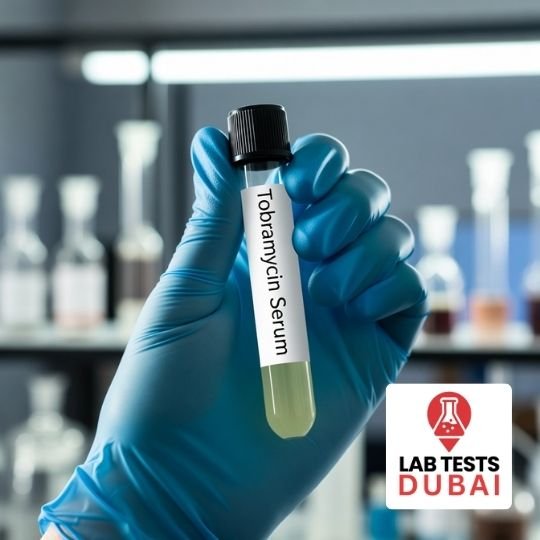
Tobramycin Serum Test – Immunoturbidometry Methodology
1.250,00 د.إ
The Tobramycin Serum Test is the critical safety net in high-stakes infectious disease management. It is the science of Therapeutic Drug Monitoring (TDM), ensuring that the medicine remains a cure rather than a poison.
Sample Type : Serum
Methodology : Immunoturbidometry
TAT : 10 Days
Description
Tobramycin Serum Test – Rapid Bactericidal Antibiotic for Gram-Negative Infections – Immunoturbidometry Methodology
When you are fighting a severe infection, specifically one caused by tough Gram-negative bacteria like Pseudomonas aeruginosa, you need heavy artillery. Tobramycin is that artillery. It is a potent aminoglycoside antibiotic capable of saving lives when other drugs fail.
But there is a catch.
Tobramycin operates in a dangerously narrow therapeutic window. This means the difference between a dose that kills the bacteria and a dose that kills your kidney cells or destroys your hearing is razor-thin.
You cannot rely on guesswork. You cannot rely on standard dosing charts. You need precise, real-time data.
The Tobramycin Serum Test is the critical safety net in high-stakes infectious disease management. It is the science of Therapeutic Drug Monitoring (TDM), ensuring that the medicine remains a cure rather than a poison.
The Balancing Act: Efficacy vs. Toxicity
Why is this test essential? Because “one size fits all” does not apply to aminoglycosides.
Every patient metabolizes drugs differently. Factors like age, weight, and most importantly, kidney function, dictate how long the drug stays in your bloodstream.
- Too Little: If the serum concentration is too low, the antibiotic fails to kill the bacteria. This leads to treatment failure, prolonged illness, and the terrifying risk of antibiotic resistance.
- Too Much: If the concentration spikes too high, it becomes toxic. The drug accumulates in the kidneys and the inner ear, causing permanent damage.
The Tobramycin Serum Test allows healthcare providers to hit the “bullseye”, optimizing the dose to ensure the bacteria are eradicated while keeping the patient safe from harm.
Who Needs This Surveillance?
This test is not for routine infections. It is reserved for serious battles. You are likely to encounter this test if you are being treated for:
- Severe Pneumonia: Especially hospital-acquired varieties.
- Complicated UTIs: Urinary tract infections that have resisted other treatments.
- Sepsis: Life-threatening bloodstream infections.
- Cystic Fibrosis: Patients with CF often require long-term management with tobramycin.
However, you also need this test if you are already on the drug and start noticing the warning signs of toxicity:
- Ototoxicity: Unexplained hearing loss, tinnitus (ringing in the ears), or vertigo/dizziness.
- Nephrotoxicity: Changes in urine output, swelling in the legs, or general fatigue indicating kidney stress.
The Pharmacokinetics: How the Body Handles the Drug
While Tobramycin is a synthetic antibiotic derived from Streptomyces tenebrarius, it behaves like a foreign invader that your body is eager to eject.
Once administered, the drug circulates through the body to fight infection. The cleanup crew is your kidneys. They filter the drug out of the blood and excrete it in urine.
This is where the risk lies. If your kidney function is even slightly compromised, the drug lingers. It accumulates. It rises to toxic levels.
Because kidney function can fluctuate daily during a severe illness, a static dose is unsafe. The Tobramycin Serum Test measures the actual concentration in your serum at specific times, telling doctors exactly how efficiently your kidneys are clearing the drug.
The Cost of the “Unknown”
Why is a 10-day turnaround for results considered acceptable? Because the stakes are permanent.
If Tobramycin levels are left unchecked and untreated:
- Treatment Failure: Subtherapeutic levels allow the bacteria to regroup. This can lead to sepsis, organ failure, and death.
- Irreversible Hearing Loss: The drug damages the hair cells in the inner ear. Once they die, they do not grow back.
- Kidney Failure: Acute kidney injury can complicate the hospital stay, requiring dialysis or causing permanent renal insufficiency.
This test is the barrier between a successful recovery and a life-altering complication.
Timing is Everything: How to Prepare
The accuracy of this test depends entirely on when the blood is drawn. There are two critical moments doctors look for:
- Trough Level: Drawn just before the next scheduled dose. This shows the lowest concentration of the drug in the body, ensuring it has been cleared enough to prevent toxicity.
- Peak Level: Drawn shortly after administration (usually 30-60 minutes). This shows the highest concentration, ensuring it is high enough to kill the bacteria.
Preparation Guidelines:
- Medication Review: Inform your healthcare provider about all medications. Certain drugs (like diuretics or other antibiotics) can interact with Tobramycin.
- Coordination: Follow your doctor’s instructions precisely regarding when to stop eating or drinking, and exactly when to arrive for the blood draw relative to your last dose.
The Technology: Immunoturbidometry
This isn’t a simple “yes or no” test. It is a quantitative measurement.
The lab utilizes Immunoturbidometry. This advanced method involves mixing the serum with antibodies that bind specifically to Tobramycin. This binding creates a reaction that changes the “turbidity” (cloudiness) of the solution. By measuring this change with extreme precision, the machine calculates the exact concentration of the drug in your blood.
Test Overview:
- Sample Type: Serum
- Methodology: Immunoturbidometry
- Turnaround Time (TAT): 10 Days
While the 10-day turnaround reflects the rigorous and meticulous nature of this analysis, the insights it provides are foundational for adjusting your treatment plan safely.
Take Control of Your Recovery
Fighting a severe Gram-negative infection is scary. The treatment is potent. But you don’t have to navigate the risks blindly.
The Tobramycin Serum Test empowers you and your medical team to treat the infection with mathematical precision. It ensures that the powerful weapon you are using saves your life without sacrificing your hearing or your kidneys.
Don’t leave your safety to chance.
Whether you are managing a chronic condition like Cystic Fibrosis or supporting a loved one through a critical hospital stay, ensure the treatment is as safe as it is effective.
Book your lab test today to get started. Prioritize precision, protect your organs, and secure a safer path to recovery.
Frequently Asked Questions – Tobramycin Serum Test
What is the Tobramycin Serum Test?
This test measures the concentration of tobramycin, a powerful aminoglycoside antibiotic, in your blood serum. It’s used for therapeutic drug monitoring (TDM) to ensure levels are high enough to kill serious Gram-negative bacteria (like Pseudomonas, E. coli, Klebsiella) but not so high that they cause kidney damage or hearing loss.
Why is monitoring tobramycin levels important?
Tobramycin has a narrow therapeutic window:
– Too low: Ineffective treatment, risk of antibiotic resistance
– Too high: Risk of nephrotoxicity (kidney damage) and ototoxicity (hearing loss or balance issues)
Monitoring ensures your dose is optimized for safety and efficacy, especially during IV therapy for severe infections like sepsis, pneumonia, or cystic fibrosis-related lung infections.
When should this test be done?
Testing is typically performed:
– After the 3rd or 4th dose (once steady state is reached)
– If you have kidney impairment or are elderly
– If you’re not improving as expected
– Before dose adjustments
Both trough levels (just before the next dose) and sometimes peak levels are measured based on clinical need.
Do I need to fast before the test?
No fasting is required. However, it’s critical to time the blood draw correctly, usually 30 minutes before your next scheduled tobramycin dose (for trough level). Inform the phlebotomist about your exact dosing schedule.
How soon will I get my results?
Thanks to Immunoturbidometry methodology, results are typically available within 10 business days. Your treating physician will use these results to adjust your dosage for optimal safety and infection control.
Can this test be done at home?
Yes! Lab Tests Dubai offers timed home blood collection by a licensed phlebotomist who will coordinate with your dosing schedule to draw blood at the correct interval, ensuring accurate trough-level measurement while maintaining your treatment plan.

Reviews
There are no reviews yet.