
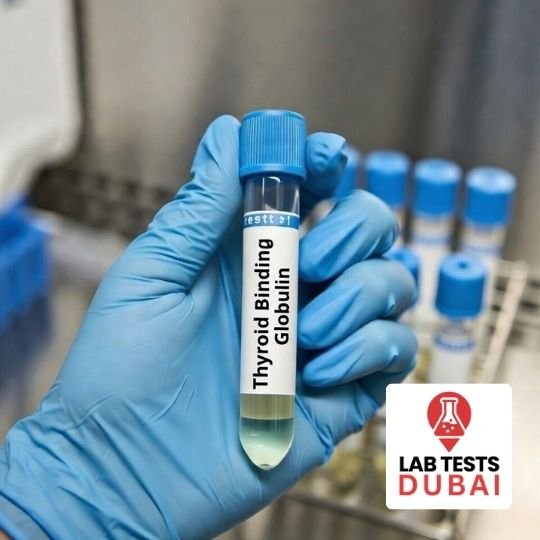
Thyroid Binding Globulin (TBG) for Accurate Thyroid Hormone Analysis – High-Purity Serum Protein for Radioimmunoassay & Diagnostics
280,00 د.إ
The Thyroid Binding Globulin (TBG) test measures the transport system. It is the advanced diagnostic tool that uncovers the hidden variables affecting your hormonal balance, offering answers where standard tests fall silent.
Sample Type : Serum
Methodology : Radioimmunoassay
TAT : 21 Days
Description
Thyroid Binding Globulin (TBG) for Accurate Thyroid Hormone Analysis – High-Purity Serum Protein for Radioimmunoassay
You have done the groundwork. You’ve had your TSH, T3, and T4 tested. You’ve looked at the numbers, and perhaps your doctor has told you everything looks “normal.” Yet, you still feel the unmistakable symptoms of thyroid dysfunction: the fatigue, the brain fog, the weight fluctuations, and the temperature intolerance.
If this sounds familiar, you may be missing a critical piece of the puzzle. The problem might not be how much thyroid hormone your body produces, but how it gets transported to your cells.
Enter Thyroid Binding Globulin (TBG).
While standard thyroid tests measure the hormones themselves, the TBG test measures the transport system. It is the advanced diagnostic tool that uncovers the hidden variables affecting your hormonal balance, offering answers where standard tests fall silent.
The “Bus” Analogy: Understanding Thyroid Transport
To understand why TBG matters, you have to change how you visualize thyroid hormones.
Most thyroid hormones (T3 and T4) are not floating freely in your blood; they are hitching a ride. They are bound to proteins, primarily Thyroid Binding Globulin. Think of TBG as a fleet of buses. The hormones are the passengers.
- Total Hormone: The total number of passengers (hormones) in the blood.
- Free Hormone: The small percentage of passengers who actually hop off the bus and enter your cells to do the work.
If you have too many buses (High TBG), the passengers are all seated. Your blood might show high hormone levels, but your cells are starving because no one is getting off the bus. This mimics hypothyroidism.
If you have too few buses (Low TBG), the passengers are forced to walk. Your cells get flooded with hormones, causing hyperthyroidism symptoms, even if your total hormone production looks average.
The TBG test counts the buses. It tells you if your transportation system is skewing your standard test results.
Why You Need This Advanced Insight
This test is not for everyone; it is for the complex cases, the “medical mysteries.” It is indispensable when:
- Standard Tests Don’t Match Symptoms: Your TSH and T4 are normal, but you feel terrible. TBG dysfunction explains this discrepancy.
- You Are Pregnant or on Estrogen Therapy: Estrogen boosts TBG production. This can alter thyroid hormone requirements significantly during pregnancy or while on birth control/HRT.
- Suspected Resistance: Rarely, patients have thyroid hormone resistance syndromes where the feedback loops are broken. TBG levels help map out this terrain.
- Liver or Kidney Issues: Since the liver produces TBG, issues with organ function can directly disrupt thyroid balance.
The Biology Behind the Binding
Thyroid Binding Globulin is naturally produced in the liver. It is the gatekeeper of hormone availability. However, its production is highly sensitive to your physiological state:
- Estrogen: High levels (from pregnancy, oral contraceptives, or hormone replacement) cause the liver to produce more TBG.
- Androgens and Illness: High testosterone or severe illness can cause TBG levels to drop.
- Genetics: Some individuals are simply born with genetic variations that cause high or low TBG levels.
Without measuring TBG, a doctor might look at a “normal” blood test and miss the fact that your hormones are effectively trapped or unregulated.
The Cost of the Unknown
Ignoring the transport mechanism can lead to years of frustration. If you have high TBG and are treated based on “normal” Total T4 levels, you may remain under-treated, suffering from fatigue, depression, weight gain, and infertility.
Conversely, misinterpreting low TBG can lead to a misdiagnosis of hyperthyroidism, resulting in unnecessary treatments that reduce your hormone levels to dangerous lows.
Long-term, untreated thyroid imbalance, regardless of the cause, can strain the cardiovascular system, weaken bones (osteoporosis), and severely degrade your quality of life.
Precision Testing: The Radioimmunoassay Standard
Because TBG levels are nuanced and require high precision to interpret alongside thyroid hormones, we utilize the Radioimmunoassay (RIA) methodology.
RIA is a highly sensitive, “gold standard” laboratory technique capable of detecting minute concentrations of proteins. It ensures that the “bus count” is accurate, allowing for a definitive diagnosis.
Test Overview:
- Sample Type: Serum
- Methodology: Radioimmunoassay (RIA)
- Turnaround Time: 21 Days
While the 21-day turnaround is longer than basic screenings, it reflects the specialized nature of this analysis. This is a deep dive into your protein chemistry, designed to provide answers that standard panels cannot.
Take Control of Your Thyroid Narrative
If you have been living in the gap between “normal test results” and “abnormal symptoms,” it is time to close that gap.
The Thyroid Binding Globulin (TBG) test offers the precision and scientific depth needed to understand your body’s unique hormonal dynamics. It moves beyond the surface level of diagnosis, empowering you and your healthcare provider to create a treatment plan that actually works.
Don’t settle for “normal” if you don’t feel normal. Book your TBG test online today. Your path to clarity begins here.
Frequently Asked Questions – Thyroid Binding Globulin (TBG) Test
What is Thyroid Binding Globulin (TBG)?
TBG is a protein produced by the liver that binds and transports thyroid hormones (T4 and T3) in the bloodstream. Only a small fraction of thyroid hormones circulate as “free” (biologically active); the rest are bound to TBG. Measuring TBG helps explain why Total T4/T3 levels may appear abnormal, even when Free T4/T3 and thyroid function are normal.
Why test TBG instead of just Free T4?
In some cases, Total T4 is high or low, but Free T4 is normal. This discrepancy is often due to changes in TBG levels, not thyroid dysfunction. TBG testing clarifies whether abnormal Total T4 is caused by:
– Liver disease
– Pregnancy or estrogen therapy
– Genetic TBG deficiency or excess
– Nephrotic syndrome or malnutrition
It prevents misdiagnosis and unnecessary treatment.
What conditions affect TBG levels?
High TBG: Pregnancy, estrogen use (birth control, HRT), hepatitis, acute intermittent porphyria.
Low TBG: Liver cirrhosis, nephrotic syndrome, severe illness, malnutrition, androgen use, glucocorticoids, acromegaly.
Genetic variants can also cause inherited high or low TBG without symptoms.
Do I need to fast before the test?
No fasting is required. However, inform your doctor about medications, especially estrogen, testosterone, corticosteroids, or anticonvulsants, as they can significantly alter TBG levels.
How soon will I get my results?
Due to specialized Radioimmunoassay (RIA) methodology, results typically take 21 business days. You’ll receive a detailed report with your TBG level and clinical interpretation—ideal for endocrinologists evaluating complex thyroid cases.
Is this test part of routine thyroid screening?
No. TBG is a specialized test used only when Total T4/T3 and Free T4/T3 don’t align, or when there’s suspicion of binding protein disorders. It’s not needed for standard hypothyroidism or hyperthyroidism diagnosis—but it’s essential for resolving diagnostic confusion.

Reviews
There are no reviews yet.