
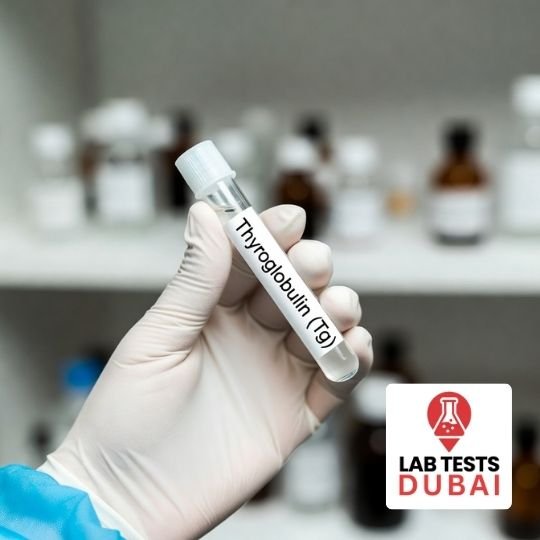
Thyroglobulin (Tg)
320,00 د.إ
The Thyroglobulin (Tg) Test is the cornerstone of that vigilance. It is a highly specialized diagnostic tool that acts as a biological radar, scanning for the faintest echo of thyroid disease.
Sample Type : Serum
Methodology : Chemiluminescence
TAT : 2 Days
Description
Thyroglobulin (Tg) Test
The journey through thyroid cancer treatment is a grueling one. Surgery, radioactive iodine therapy, and the emotional toll of diagnosis leave a profound impact. When the active treatment ends, a new phase begins: the phase of vigilance.
For survivors, the question is never “Is it gone?” but rather, “Is it staying gone?”
The Thyroglobulin (Tg) Test is the cornerstone of that vigilance. It is a highly specialized diagnostic tool that acts as a biological radar, scanning for the faintest echo of thyroid disease. Because thyroglobulin is produced exclusively by thyroid cells, this test serves as the most reliable marker for detecting recurrence long before it becomes visible on a scan.
The “Unique Fingerprint” of Thyroid Cells
To understand the power of this test, you must understand the biology.
Thyroglobulin is a protein produced solely by the thyroid gland—or by thyroid cancer cells. Think of it as a unique fingerprint. In a healthy body, the thyroid uses Thyroglobulin as a precursor to produce the hormones (T3 and T4) that regulate metabolism.
However, once a patient has undergone a total thyroidectomy (surgical removal of the thyroid) and radioactive iodine ablation, there should be no thyroid cells left in the body.
- If Thyroglobulin is Undetectable: It suggests the treatment was successful, and no thyroid tissue remains.
- If Thyroglobulin is Present: It is a definitive signal that thyroid cells—either benign remnants or cancerous cells—are still present and growing somewhere in the body.
This makes the Tg test not just a measure of protein, but a measure of remission.
Why This Test Is Non-Negotiable for Survivors
For individuals with a history of thyroid cancer, standard monitoring isn’t enough. Ultrasounds and physical exams can miss microscopic spread. The Tg test fills that gap.
You need this test to:
- Confirm Remission: Verify that your treatment successfully eradicated all thyroid tissue.
- Detect Recurrence Early: Thyroglobulin levels often rise months or even years before a tumor grows large enough to be seen on imaging. Early detection allows for less invasive interventions.
- Monitor Treatment Efficacy: If you require additional treatments, Tg levels serve as a real-time scoreboard to show if the therapy is working.
Recognizing the Signs: When to Be Vigilant
While the Tg test is primarily used for routine monitoring in asymptomatic patients, specific signs should prompt an immediate check. If you have a history of thyroid disease, be alert to:
- Physical Changes: A new lump or swelling in the neck.
- Vocal Changes: Persistent hoarseness or changes in voice that do not resolve.
- Mechanical Issues: Difficulty swallowing or the sensation of a lump in the throat (dysphagia).
- Systemic Symptoms: Unexplained fatigue, rapid heartbeat (hyperthyroidism symptoms), or unexplained weight gain (hypothyroidism symptoms).
Even in the absence of these symptoms, regular Tg testing is the standard of care for life.
The Biology of Production and Risk
Under normal circumstances, the thyroid produces Thyroglobulin as a matter of routine. However, the presence of Tg where it shouldn’t be is a warning signal.
If abnormal Thyroglobulin levels are left untreated or ignored, the implications are serious. It may indicate that thyroid cancer has metastasized (spread) to other parts of the body, such as the lungs or bones. As these cells grow, they can disrupt normal organ function and become significantly harder to treat.
Furthermore, fluctuating Tg can signal ongoing dysfunction in any remaining thyroid tissue, leading to metabolic imbalances that affect the heart, weight, and energy levels.
How to Prepare for Precision
Because we are hunting for microscopic amounts of protein, the test requires careful preparation to ensure accuracy.
- Medication Review: Inform your doctor about all medications and supplements.
- The TSH Stimulation Protocol: In some cases, to make the test as sensitive as possible, your doctor may recommend temporarily stopping your thyroid hormone replacement therapy before the blood draw. This spikes your TSH (Thyroid Stimulating Hormone), which forces any remaining thyroid cells to “wake up” and produce Thyroglobulin, making them easier to detect. Note: This can cause temporary hypothyroid symptoms like fatigue.
- Fasting: Fasting is generally not required, but always follow the specific instructions provided by your healthcare team.
The Test Overview
- Sample Type: Serum (A simple blood draw).
- Methodology: Chemiluminescence. This advanced technique uses light emission to detect trace amounts of Thyroglobulin, offering superior sensitivity compared to older methods.
- Turnaround Time: 2 Days.
Take Control of Your Health
Living after thyroid cancer requires a shift in mindset, from fighting a disease to guarding your health. The Thyroglobulin (Tg) Test provides the security and clarity you need to move forward with confidence.
It transforms the fear of the unknown into actionable data. It allows you to celebrate your health milestones with scientific proof.
Don’t leave your recovery to chance. Book your Tg test online today and ensure your path remains clear.
Frequently Asked Questions – Thyroglobulin (Tg) Test
What is the Thyroglobulin (Tg) test?
Thyroglobulin is a protein produced exclusively by thyroid cells, both normal and cancerous. After total thyroidectomy for thyroid cancer, Tg should be undetectable. This test is used to monitor for residual or recurrent thyroid cancer and assess treatment response.
Who should take this test?
This test is essential for:
– Patients who’ve had total thyroidectomy for papillary or follicular thyroid cancer
– Individuals undergoing radioactive iodine (RAI) therapy
– Those in long-term surveillance for cancer recurrence
– Anyone with rising neck lumps, unexplained fatigue, or voice changes post-thyroid cancer
Why is TSH stimulation sometimes needed?
Thyroglobulin production is stimulated by TSH. To maximize sensitivity, doctors may either:
– Withdraw thyroid hormone replacement (to raise TSH naturally)
– Use recombinant human TSH (Thyrogen®) injections
This ensures even tiny amounts of residual thyroid tissue produce detectable Tg levels.
Do I need to fast before the test?
No fasting is required. However, timing matters: the test is usually done alongside TSH and anti-Tg antibodies. Inform your doctor if you’re on thyroid hormone replacement, as your dosing schedule may affect interpretation.
How soon will I get my results?
Thanks to Chemiluminescence methodology, results are typically available within 2 business days. You’ll receive a detailed report showing your Tg level, critical for guiding imaging or further treatment decisions.
Why is anti-Tg antibody testing done at the same time?
Up to 25% of thyroid cancer patients have anti-thyroglobulin antibodies (TgAb), which can falsely lower or mask Tg levels. Testing for TgAb ensures your Tg result is accurate and reliable—never interpret Tg without checking TgAb simultaneously.

Reviews
There are no reviews yet.