
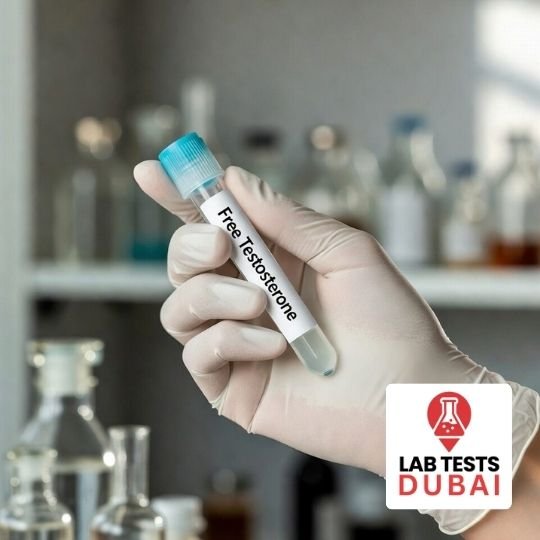
Testosterone – Free Test
300,00 د.إ
Testosterone – Free measures only the tiny fraction, typically 1% to 3%, that is unbound and biologically active.
Sample Type : Serum
Methodology : Enzyme-immunoassay
TAT : 3 Days
Description
Testosterone – Free Lab Test: Comprehensive Hormonal Health Assessment
It is a frustrating scenario that plays out in countless doctor’s offices. You feel the symptoms, the fatigue, the brain fog, the loss of vitality. You get your blood work done, and the results come back. Your doctor looks at the report and says, “Your Total Testosterone is normal. There’s nothing wrong.”
But you know something is wrong.
The issue often lies in the difference between how much hormone you have and how much hormone you can actually use. This is the distinction that the Testosterone – Free Lab Test illuminates.
While “Total Testosterone” measures the sum of all hormone in your blood, Free Testosterone measures only the tiny fraction, typically 1% to 3%, that is unbound and biologically active. It is the difference between having a fleet of cars in a garage (Total) and having them actually out on the highway driving (Free).
If you feel symptoms of hormonal imbalance despite “normal” standard results, this test is the missing piece of the puzzle.
Why Free Testosterone Matters More Than You Think
Testosterone is the engine of metabolism, muscle maintenance, libido, and bone density. However, in the bloodstream, the vast majority of testosterone is tightly bound to proteins, primarily Sex Hormone Binding Globulin (SHBG) and albumin. It is essentially “parked.”
Only the Free Testosterone is unattached and free to enter cells and trigger biological responses.
This test is essential because:
- It Explains the Unexplained: You can have “normal” Total Testosterone but very low Free Testosterone, especially if your SHBG levels are high. This leads to symptoms of low testosterone even when standard tests say you are fine.
- It Guides Treatment: For hormone replacement therapy, monitoring Free Testosterone gives a far more accurate picture of therapeutic success than total levels alone.
- It Diagnoses Complex Conditions: From Polycystic Ovary Syndrome (PCOS) in women to hypogonadism in men, this test provides the specificity needed for a precise diagnosis.
Who Is This Test For?
Hormonal health is not exclusive to men. This test is a critical diagnostic tool for both genders.
For Men
You may need this test if you are experiencing:
- Sexual Dysfunction: Low libido or erectile dysfunction that doesn’t correlate with Total Testosterone levels.
- Physical Decline: Loss of muscle mass, increased body fat (especially around the abdomen), and reduced bone density.
- Mental & Emotional Shifts: Unexplained fatigue, depression, irritability, or a general lack of motivation (“brain fog”).
For Women
Women rely on small amounts of testosterone for ovarian function, bone strength, and libido. You may need this test if you are experiencing:
- Menstrual Irregularities: Infrequent, absent, or irregular menstrual cycles.
- Androgen Excess: Symptoms like hirsutism (excessive facial or body hair), severe acne, or male-pattern baldness.
- Fertility Struggles: Difficulty conceiving, often linked to conditions like PCOS.
For Both
- Chronic Fatigue: A deep, unrelenting tiredness that sleep doesn’t fix.
- Bone Health concerns: Osteoporosis or frequent fractures.
The Biology: Production and Availability
Testosterone is primarily produced in the testes for men and the ovaries for women, with the adrenal glands contributing a small amount for both. The body regulates this through a sophisticated feedback loop involving the brain’s hypothalamus and pituitary gland.
However, “production” is only half the battle. “Availability” is the other.
As we age, or due to conditions like obesity, liver disease, or hyperthyroidism, the levels of binding proteins (SHBG) can increase. This acts like a sponge, soaking up free testosterone and leaving your cells starved of the hormone they need. This test isolates the “unsoaked” hormone, the only part that truly matters for your well-being.
The Risks of the Unknown
Living with undiagnosed low or high Free Testosterone has long-term consequences that extend far beyond mood swings.
If Low Free Testosterone is Ignored (Men):
- Osteoporosis: You lose bone density, increasing the risk of fractures.
- Metabolic Syndrome: Increased risk of obesity, high blood pressure, and type 2 diabetes.
- Cardiovascular Risk: Potential links to heart disease and atherosclerosis.
If High Free Testosterone is Ignored (Women):
- Reproductive Health: It can exacerbate PCOS, leading to severe infertility and metabolic complications.
- Endometrial Risks: Unopposed androgens can disrupt the estrogen balance, potentially increasing the risk of endometrial issues.
- Physical Distress: Chronic acne and hair growth can significantly impact mental health and self-esteem.
The Test: Precision in 3 Days
We believe in providing clarity without the wait. The Testosterone – Free Lab Test is designed for accuracy and convenience.
- Preparation: No fasting is required. You can maintain your daily routine. However, it is crucial to inform your healthcare provider about any medications or supplements you are taking, as they can influence hormone binding.
- The Sample: A simple blood draw (Serum).
- The Methodology: We utilize Enzyme-immunoassay technology. This is a highly sensitive method capable of isolating and measuring the minute amounts of free hormone with precision.
- Turnaround Time: 3 Days.
Stop Guessing, Start Feeling
Don’t let a “normal” Total Testosterone result dismiss your symptoms. If you feel the imbalance, it’s time to measure what’s actually working in your body.
Whether you are monitoring hormone replacement therapy, investigating unexplained symptoms, or assessing your overall hormonal health, the Testosterone – Free Lab Test offers the insights you need to take control.
Book your lab test online today to get started. Stop managing symptoms and start optimizing your vitality.
Frequently Asked Questions – Free Testosterone Test
What is Free Testosterone?
Free testosterone is the small fraction of total testosterone that circulates unbound to proteins like SHBG or albumin. This is the biologically active form that your cells can actually use. While total testosterone includes both bound and unbound hormone, free testosterone gives a more accurate picture of your body’s available hormone levels.
Why test Free Testosterone instead of Total Testosterone?
Total testosterone can appear normal even when symptoms suggest low T, especially if you have high SHBG (common in aging, liver disease, or hyperthyroidism). Free testosterone reveals whether enough active hormone is reaching your tissues. It’s particularly useful for:
– Men with classic low-T symptoms but “normal” total T
– Women with PCOS or hirsutism
– Patients on hormone therapy needing precise monitoring
What symptoms suggest I need this test?
In men: low libido, erectile dysfunction, fatigue, loss of muscle mass, increased belly fat, depression.
In women: excess facial/body hair, acne, irregular periods, infertility, or PCOS.
It’s also essential if you’re on TRT, HRT, or anti-androgen therapy.
Do I need to time the test to a specific time of day?
Yes. Testosterone peaks in the early morning (7–10 AM). For accurate baseline assessment, especially in men, testing should be done before 10 AM. Women can test any time, but consistency matters if monitoring treatment.
How soon will I get my results?
Thanks to enzyme-immunoassay methodology, results are typically available within 3 business days. You’ll receive a secure digital report with your free testosterone level and reference range, ideal for sharing with your endocrinologist or wellness provider.
Can lifestyle affect my free testosterone levels?
Yes. Factors that lower free testosterone include:
– Obesity (increases SHBG binding)
– Chronic stress or poor sleep
– Excessive alcohol or opioid use
– Certain medications (e.g., corticosteroids, SSRIs)
Conversely, strength training, weight loss, and adequate zinc/vitamin D can increase free T, even if total T stays the same.
Reviews
There are no reviews yet.