
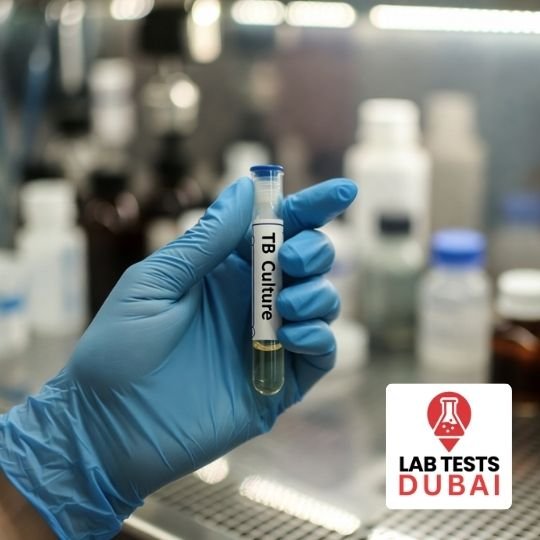
TB Culture Identification & Sensitivity
1.950,00 د.إ
TB Culture Identification test provides the full picture for Tuberculosis (TB)
Sample Type : Sputum
Methodology : Bacteriology Culture
TAT : 60 Days
Description
TB Culture Identification
A persistent cough that lingers for three weeks. Night sweats that drench your sheets. A fatigue that sleep cannot cure. These are the body’s distress signals, warning signs that an ancient, stealthy enemy may have taken root.
Tuberculosis (TB) remains one of the world’s most serious infectious diseases. While preliminary screenings like skin tests or X-rays can raise a red flag, they cannot provide the full picture. They offer a suspicion; the TB Culture Identification test provides the proof.
This test is the gold standard of TB diagnostics. It doesn’t just look for evidence of infection; it hunts down the Mycobacterium tuberculosis bacteria itself, isolating and identifying it to ensure the treatment plan is precise, effective, and lifesaving.
Why “Probable” Isn’t Enough
In medicine, certainty saves lives. A chest X-ray might show shadows on the lungs, and a rapid skin test might show exposure, but neither can confirm with 100% accuracy that you have an active, replicating infection.
The TB Culture Identification test is essential because it:
- Confirms Active Disease: It distinguishes between latent TB (sleeping bacteria) and active TB (bacteria making you sick and contagious).
- Guides Treatment: Identifying the specific bacteria allows doctors to tailor antibiotic therapy.
- Detects Drug Resistance: This is critical. TB strains can evolve to resist standard antibiotics. Culture is the first step in identifying these dangerous drug-resistant strains before treatment begins.
If you are undergoing treatment, this test is the yardstick by which success is measured, confirming that the therapy is actually working.
The Red Flags: When You Need This Test
TB often starts slowly, masquerading as a stubborn flu or bronchitis. You should consider this test if you are experiencing:
- The Persistent Cough: A cough lasting more than three weeks is the hallmark of pulmonary TB.
- Hemoptysis: Coughing up blood or blood-stained sputum.
- Systemic Shock: Unexplained weight loss, fever, chills, and night sweats severe enough to wake you.
- Respiratory Distress: Chest pain or difficulty breathing.
- High-Risk Exposure: A history of close contact with someone diagnosed with TB, or a positive preliminary screening result.
The Biology: An Unwanted Invader
Unlike hormones or enzymes, Mycobacterium tuberculosis is not naturally produced by the body. It is an intruder, transmitted through airborne droplets when an infected person coughs, sneezes, or speaks.
Once inhaled, the bacteria settle in the lungs. In a healthy immune system, they may be walled off (latent TB). But if the immune system weakens, due to stress, malnutrition, or other illnesses, the bacteria can break out, multiply, and cause damage.
The TB Culture Identification test takes a sample of your sputum and provides the specific environment these bacteria need to grow. If they grow, we know they are there.
The Cost of Silence
TB is not an illness that politely fades away. If left untreated or improperly managed due to a misdiagnosis, the consequences are severe.
- Permanent Lung Damage: The bacteria eat away at lung tissue, causing permanent cavities and respiratory failure.
- Extrapulmonary Spread: TB doesn’t stay put. It can travel to the kidneys, spine, and even the brain (meningitis), which is often fatal.
- Transmission: An untreated active patient is contagious, putting friends, family, and colleagues at risk.
- Drug Resistance: Incomplete treatment allows the bacteria to mutate into Multi-Drug Resistant (MDR) TB, which is far harder and more expensive to cure.
The Trade-Off: Why 60 Days?
In an era of instant results, waiting 60 days for a diagnosis can feel daunting. But there is a biological reason for this timeline.
Mycobacterium tuberculosis is an incredibly slow-growing organism. It divides lazily compared to common bacteria. To accurately identify it, the laboratory must culture it, give it food and warmth and wait to see if colonies grow. This “Bacteriology Culture” method takes time, but the accuracy it provides is unmatched.
Test Overview:
- Sample Type: Sputum (Phlegm).
- Methodology: Bacteriology Culture.
- Turnaround Time: Up to 60 Days.
How to Prepare for Accuracy
Because this test relies on finding live bacteria, the quality of the sample is paramount.
- The Morning Sample: Sputum production is usually highest first thing in the morning. You will likely be instructed to collect a sample immediately upon waking.
- Deep Coughing: A shallow spit won’t do. You need to cough deeply from the lungs to bring up the phlegm.
- Fasting: Avoid eating or drinking before providing the sample to prevent contamination.
- Medication Disclosure: Tell your doctor about any antibiotics you are taking, as they could inhibit bacterial growth in the culture.
Take Control of Your Health
Don’t let a cough turn into a crisis. If you have the symptoms or the risk factors, demand the accuracy of the TB Culture Identification test.
It is the first step toward reclaiming your health and protecting the people around you. Early detection leads to effective treatment. Effective treatment leads to a cure.
Book your lab test online today and take the step toward certainty.
Frequently Asked Questions – TB Culture Identification & Sensitivity
What is the TB Culture Identification & Sensitivity test?
This test isolates and identifies Mycobacterium tuberculosis, the bacteria that cause tuberculosis, from a sputum sample. Unlike rapid molecular tests (e.g., GeneXpert), culture confirms live bacterial growth and determines which antibiotics the strain is sensitive or resistant to, critical for treating drug-resistant TB.
Why is culture needed if I already had a GeneXpert or smear test?
While GeneXpert detects TB DNA quickly, it cannot confirm if the bacteria are alive or determine full drug susceptibility. Smear microscopy misses up to 50% of cases. TB culture is the gold standard for:
– Confirming active infection
– Detecting multidrug-resistant (MDR-TB) or extensively drug-resistant (XDR-TB) strains
– Guiding precise, effective treatment regimens
When should this test be done?
This test is essential if you have:
– Persistent cough >2–3 weeks with fever, night sweats, or weight loss
– A positive TB screening test (skin or blood)
– Known exposure to someone with TB
– Inadequate response to initial TB treatment
– Risk factors like HIV, diabetes, or immunosuppression
How should I collect the sputum sample?
– Collect early morning sputum (deep cough from lungs, not saliva)
– Provide 3 samples on consecutive days if possible (increases detection)
– Avoid eating, drinking, or brushing teeth before collection
– Use the sterile container provided by the lab
Poor sample quality is the #1 cause of false-negative results.
Why does it take 60 days for results?
Mycobacterium tuberculosis grows extremely slowly, often taking 2–8 weeks just to appear in culture. Additional time is needed for species confirmation and drug sensitivity testing. While newer methods are faster, culture remains the most comprehensive and reliable method for complex or resistant cases.
What happens if drug resistance is found?
If the TB strain is resistant to first-line drugs (like isoniazid or rifampin), your doctor will design a personalized regimen using second-line antibiotics, often for 9–24 months. Early detection of resistance prevents treatment failure, transmission of resistant strains, and severe complications.


Reviews
There are no reviews yet.