
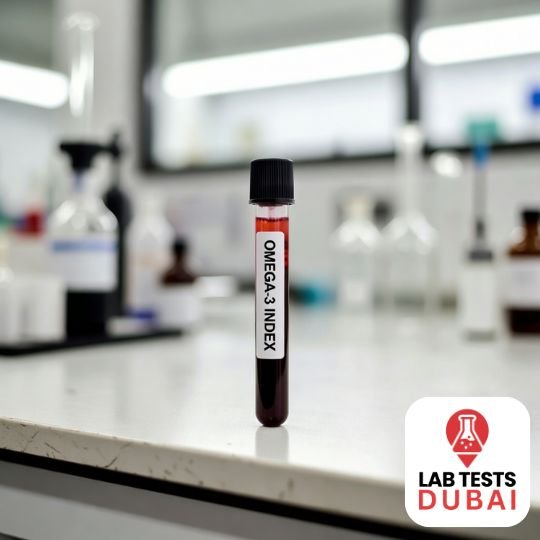
Omega-3 Index Test
900,00 د.إ
You might be taking fish oil every day, but are your cells actually absorbing it? The Omega-3 Index reveals the truth about your cardiovascular risk.
Description
Omega-3 Index Test – The Single Best Metric for Heart Health You Aren’t Tracking
If you walk into a health food store, you are bombarded by the fish oil aisle. Bottles of varying sizes, claims of “pure,” “high potency,” and “triglyceride form” stare back at you. You buy a bottle, take a capsule with breakfast, and check the box marked “healthy heart.”
But here is the uncomfortable question: How do you know it’s working?
Unlike taking painkillers for a headache, where you feel relief instantly, the benefits of Omega-3 fatty acids (EPA and DHA) are silent and cumulative. You feel the same today as you did yesterday. You assume the capsule is doing its job.
But biology is rarely that simple. Absorption varies. Genetics play a role. The quality of the supplement matters.
This is why the Omega-3 Index is rapidly becoming the gold standard for preventative health. It is a simple blood test that doesn’t guess, it measures exactly how much of these essential fatty acids are actually incorporated into your cells.
 What Is the Omega-3 Index Test?
 What Is the Omega-3 Index Test?
Think of your blood cells as a fleet of ships. The structure of those ships, the “hull”, is made of fat.
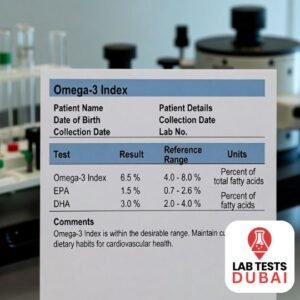
The Omega-3 Index measures the percentage of EPA (eicosapentaenoic acid) and DHA (docosahexaenoic acid) found in the membranes of your red blood cells.
- A Low Index: Your cell walls are rigid, prone to inflammation, and more likely to contribute to plaque buildup.
- A High Index: Your cell walls are fluid, flexible, and anti-inflammatory.
While you can measure Omega-3s in “plasma” (the liquid part of blood) which fluctuates wildly depending on what you ate for lunch, the Omega-3 Index (measured in serum/RBCs depending on the specific assay methodology used by the lab) provides a long-term view. It reflects your intake over the last 3 to 4 months. It is a stable, reliable biomarker of your nutritional status.
Why This Number is a “Vital Sign”
Most people know their blood pressure and their cholesterol. But if you don’t know your Omega-3 Index, you are missing a massive piece of the cardiovascular puzzle.
Research consistently shows that a low Omega-3 Index is a significant risk factor for:
- Coronary Heart Disease: It increases the risk of sudden cardiac events.
- Inflammation: The root cause of almost all chronic diseases.
- Brain Health: Low levels are linked to cognitive decline and mood disorders.
The Target: Most experts suggest that an Omega-3 Index of 8% to 12% is optimal for heart health protection.
- Below 4%: This is the “danger zone,” associated with a significantly higher risk of heart attack.
- 4% to 8%: Intermediate risk.
The “Expensive Urine” Problem
Here is the hard truth about supplements: A significant portion of the population takes cheap, low-quality fish oil that passes through their system largely unabsorbed.
Or, worse, they have a genetic predisposition that makes converting plant-based Omega-3s (ALA) into the active forms (EPA/DHA) nearly impossible.
Without testing:
- You might be spending money on supplements that have zero biological impact.
- You might have a falsely inflated sense of security about your heart health.
- You might be eating a “heart-healthy” diet that is still leaving you deficient.
The Omega-3 Index stops the guesswork. It tells you if your diet and supplements are actually changing your cellular biology.
Why It Takes 15–20 Days (And Why It’s Worth It)
You might notice that the turnaround time for the Omega-3 Index is 15–20 days. That is longer than your standard blood sugar test.
Why? Because this is not a simple machine-read result. It requires specialized analysis (often utilizing complex chromatography methods) to precisely isolate and quantify the fatty acids in your serum.
Lab Tests Dubai utilizes advanced laboratory protocols to ensure that the percentage you receive is accurate. In the world of longevity medicine, precision beats speed.
How to Optimize Your Index
Once you get your results, you have data. If your index is low, you can take actionable steps:
- Upgrade Your Supplement: Switch to high-quality triglyceride-form fish oil.
- Increase Fatty Fish Intake: Eat salmon, mackerel, sardines, or anchovies 2–3 times a week.
- Reduce Omega-6 Intake: Processed vegetable oils (soybean, corn oil) are pro-inflammatory. Balancing your Omega-6 to Omega-3 ratio is critical.
- Retest: Check again in 3–4 months to ensure your levels are rising.
Invest in Your Cellular Health
Heart health isn’t just about avoiding junk food. It’s about proactively building a body that is resilient against disease.
Knowing your Omega-3 Index is one of the most empowering steps you can take. It moves you from a passive consumer of health advice to an active manager of your own biology.
FAQs About the Omega-3 Index Test
Q: What is the Omega-3 Index Test?
A: The Omega-3 Index Test measures the percentage of EPA and DHA in your red blood cells to assess your long-term omega-3 status.
Q: Why should I take this test?
A: A healthy omega-3 index supports heart health, brain function, balanced inflammation, and overall wellness. Optimal levels (8–12%) are linked to lower cardiovascular risk.
Q: How is the Omega-3 Index Test done?
A: A small blood sample is collected—either a finger-prick or venous draw—and analyzed in a lab to determine your EPA and DHA percentages.
Q: What do my Omega-3 Index results mean?
A: Results are expressed as the percentage of EPA + DHA in your red blood cells. Higher levels indicate better omega-3 status and potentially reduced inflammation and heart disease risk.
Q: Do I need to fast before the test?
A: Fasting is not usually required because the Omega-3 Index reflects long-term omega-3 intake, not short-term dietary changes.
Q: How often should I retest my Omega-3 Index?
A: Many people retest every 3–6 months, especially if they are adjusting their diet or taking omega-3 supplements.
Don’t rely on assumptions. Get the data. Book your test today with Lab Tests Dubai
Related products
-
-
-
Sale!
Food Intolerance Test
Original price was: 1.700,00 د.إ.1.299,00 د.إCurrent price is: 1.299,00 د.إ. -