
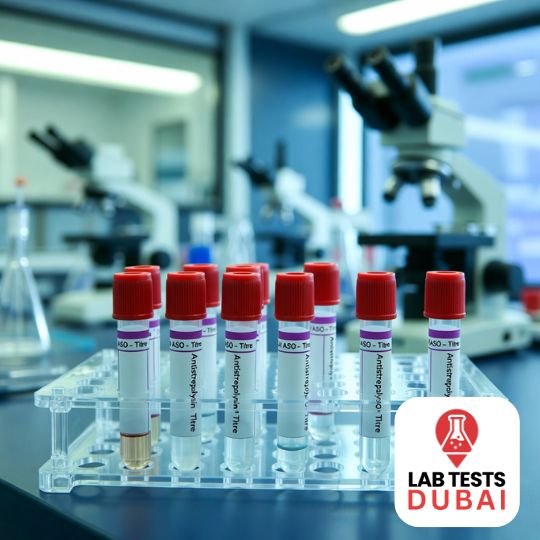
Antistreptolysin “O” (ASO) – Titre Test
150,00 د.إ
Antistreptolysin “O” (ASO) – Titre is a diagnostic test used to detect antibodies against Streptolysin O, a toxin produced by Group A Streptococcus bacteria. It helps diagnose recent or past streptococcal infections, including rheumatic fever and post-streptococcal glomerulonephritis. Key features include high sensitivity, quantitative measurement, and reliable detection of immune response.
Sample Type : Serum
Methodology : Spectrophotometry
TAT : 1 Day
Description
Antistreptolysin “O” (ASO) – Titre Test – Accurate Detection of Recent Strep Infection
The Antistreptolysin O (ASO) – Titre Test from Lab Tests Dubai is a specialized blood test that measures antibodies against streptolysin O, a toxin released by Group A Streptococcus (GAS)bacteria—the same bug behind strep throat and skin infections.
While most strep infections are mild, untreated or delayed cases can trigger serious immune complications, including:
- Acute Rheumatic Fever (ARF) – heart valve damage
- Post-Streptococcal Glomerulonephritis (PSGN) – kidney inflammation
This test is essential for:
- Diagnosing recent streptococcal infection when throat swabs are negative
- Evaluating joint pain, carditis, or chorea (signs of rheumatic fever)
- Investigating hematuria, swelling, or high blood pressure (signs of kidney disease)
- Monitoring immune response in children with recent sore throat or impetigo
Using high-precision spectrophotometry, this serum-based test delivers accurate results within just 1 day, helping pediatricians, internists, and cardiologists identify post-strep complications early.
Available with home blood collection, Lab Tests Dubai ensures fast, accurate, and stress-free testing—so you can protect your heart and kidneys after a strep infection.
 Why You Need This Test
 Why You Need This Test
If you or your child had a sore throat, scarlet fever, or skin infection weeks ago and now have joint pain, fatigue, or dark urine, this test could reveal a dangerous immune overreaction.
You need the ASO Titre Test if:
- You’ve had a recent sore throat or skin infection (impetigo)
- You’re experiencing joint pain, swelling, or fever weeks after illness
- You have shortness of breath, chest pain, or murmurs (heart involvement)
- You notice facial swelling, reduced urine output, or blood in urine
- Your child shows Sydenham’s chorea (involuntary movements)
- You’re being evaluated for acute rheumatic fever or glomerulonephritis
This test helps:
- Confirm recent Group A Strep exposure
- Diagnose ARF or PSGN when culture is negative
- Guide antibiotic or anti-inflammatory treatment
- Prevent long-term heart or kidney damage
Early detection = lifelong organ protection.
Symptoms That Indicate This Test
Consider the ASO Titre Test if you or your child experience:
✅ For Rheumatic Fever (2–4 weeks post-strep):
- Migratory joint pain (knees, ankles, elbows)
- Fever and fatigue
- Heart murmurs, chest pain, or shortness of breath
- Involuntary movements (Sydenham’s chorea)
- Skin nodules or erythema marginatum (rash)
✅ For Post-Strep Glomerulonephritis (1–2 weeks post-skin/strep throat):
- Dark, tea-colored urine (hematuria)
- Swelling in face, hands, or feet (edema)
- High blood pressure
- Reduced urine output
- Fatigue or nausea
✅ For Recent Infection:
- History of strep throat or impetigo
- Scarlet fever rash
- Untreated sore throat with lingering symptoms
These signs may point to post-streptococcal immune disease—and this test helps start life-saving treatment.
Natural Production: How ASO Antibodies Reveal Past Strep Infection
When Group A Streptococcus infects the throat or skin, it releases streptolysin O, a toxin that damages cells.
Your immune system responds by producing antistreptolysin O (ASO) antibodies—a delayed but specific response.
Key Timeline:
- Antibodies rise 1–3 weeks after infection
- Peak at 3–5 weeks
- May remain elevated for 6–12 months
Normal ASO Titre (Adults & Children):
- <200 IU/mL → Generally negative
- 200–400 IU/mL → Mild elevation (possible recent infection)
- >400 IU/mL → High likelihood of recent GAS infection
Important Notes:
- Not all strep infections raise ASO (skin infections often do)
- Negative ASO doesn’t rule out PSGN (use anti-DNase B for skin-related cases)
- Always interpret with clinical symptoms and history
What Happens If Untreated? Risks of Ignoring Post-Strep Complications
Ignoring high ASO levels with symptoms can lead to:
⚠️ Rheumatic Heart Disease – permanent valve damage, heart failure
⚠️ Chronic Kidney Disease – from untreated glomerulonephritis
⚠️ Sydenham’s Chorea – neurological disability
⚠️ Recurrent Infections & Inflammation
⚠️ Sepsis or Endocarditis – in severe carditis
The good news? Most complications are preventable with:
- Prompt penicillin treatment for active infection
- Long-term antibiotic prophylaxis (for rheumatic fever)
- Blood pressure and kidney monitoring
Early testing = prevention of lifelong disability.
How to Prepare for the Test
To ensure accurate results:
✅ No fasting required
✅ Continue your regular medications—but inform your doctor
✅ Inform your doctor of:
- Recent sore throat, skin infection, or scarlet fever
- History of rheumatic fever or kidney disease
- Antibiotic use (may reduce antibody rise)
A serum blood sample is collected via standard draw—available at our labs or via home collection.
Test Overview: Spectrophotometry Method
Interpretation:
- <200 IU/mL → Negative (no recent infection)
- 200–400 IU/mL → Equivocal (repeat if symptomatic)
- >400 IU/mL → Positive (supports recent GAS infection)
Note: Often paired with anti-DNase B for skin-related PSGN.
Benefits of the ASO Titre Blood Test
🔹 Early Detection of Rheumatic Fever
Catch heart-threatening inflammation before damage occurs.
🔹 Kidney Protection
Identify glomerulonephritis early to preserve function.
🔹 Post-Infection Clarity
Know if lingering symptoms are immune-related.
🔹 Guide Antibiotic Prophylaxis
Start long-term penicillin if ARF is confirmed.
🔹 Peace of Mind for Parents
Monitor children after strep throat or impetigo.
If you’re worried about joint pain, heart issues, or kidney problems after a sore throat, the ASO Titre Test gives you the answers you need in just 1 day.
Frequently Asked Questions – Antistreptolysin O (ASO) Titre Test
1. What is the ASO Titre test?
The Antistreptolysin O (ASO) Titre test measures antibodies produced in response to a recent Streptococcus A infection, commonly linked to throat or skin infections.
2. Why is the ASO test done?
This test helps diagnose post-streptococcal complications such as rheumatic fever, glomerulonephritis, and inflammatory conditions triggered by untreated strep infections.
3. Do I need to fast before the ASO test?
No fasting is required. You can take the ASO test at any time of the day.
4. How long does it take to receive the results?
ASO test results are usually available within 24 hours and include a detailed antibody level analysis.
5. Can a high ASO level confirm an active infection?
No. High ASO levels indicate a recent streptococcal infection, not necessarily an active one. Doctors evaluate symptoms and other tests for confirmation.
6. Can children take the ASO Titre test?
Yes. Children frequently undergo ASO testing because streptococcal infections are more common in pediatric age groups.
7. Is the ASO test used for monitoring treatment?
Yes. Follow-up ASO levels help doctors determine whether antibody levels are decreasing after treatment.
8. Is the ASO test painful?
The test involves a simple blood draw and causes minimal discomfort.



Reviews
There are no reviews yet.