
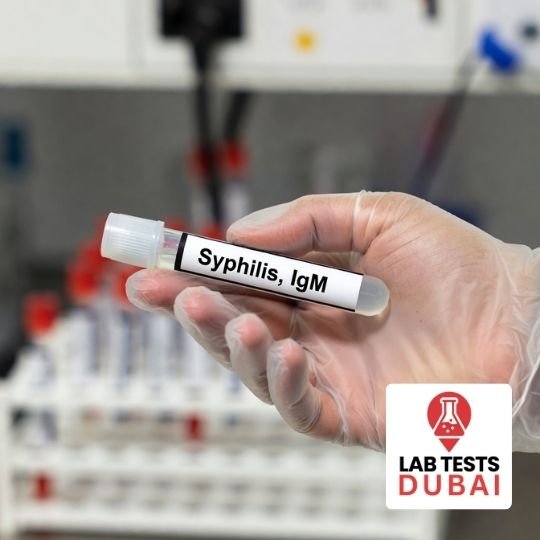
Syphilis, IgM Test
450,00 د.إ
The Syphilis, IgM Lab Test is the tool that listens to that voice. Unlike standard screenings that tell you if you have ever been exposed, this specialized test detects the IgM antibodies produced during an active, recent infection.
Sample Type : Serum
Methodology : Enzyme-immunoassay or Immunofluorescence (FTA-IgM)
TAT : 10 Days
Description
Syphilis, IgM Lab Test
In the landscape of sexually transmitted infections, few are as notoriously deceptive as syphilis. Known historically as “the great imitator,” it can mimic the symptoms of countless other illnesses, hiding in plain sight. But while the infection may be a master of disguise, your immune system has a distinct voice.
The Syphilis, IgM Lab Test is the tool that listens to that voice. Unlike standard screenings that tell you if you have ever been exposed, this specialized test detects the IgM antibodies produced during an active, recent infection. It is the diagnostic equivalent of catching a criminal in the act, rather than just finding their fingerprint years later.

Why You Need This Test
When it comes to syphilis, timing is everything. The infection progresses through stages, primary, secondary, latent, and tertiary. The earlier you catch it, the easier it is to cure. If you wait until the later stages, the damage can be irreversible.
This test is vital because it targets IgM antibodies.
- IgM vs. IgG: Most tests look for IgG antibodies, which can remain in your blood for life, indicating a past infection that has been treated. The IgM test, however, looks for the antibodies your body produces immediately to fight the bacteria.
- Confirming Activity: A positive IgM result strongly suggests a current, active infection requiring immediate treatment. It distinguishes a new outbreak from a historical scar.
This specificity is crucial for anyone who has recently been exposed, is showing early symptoms, or needs to monitor the effectiveness of ongoing treatment.
The Silent Signs: When to Test
Syphilis is notoriously tricky because its symptoms can be mild, fleeting, or easily mistaken for something else. You should consider the Syphilis IgM test if you notice:
The Primary Stage:
- The Chancre: A firm, round, and painless sore that appears at the infection site (genitals, mouth, or rectum). Because it is painless, it often goes unnoticed and heals on its own, but the bacteria remains in the body.
The Secondary Stage:
- The Rash: A rough, red, or reddish-brown rash that typically appears on the palms of the hands or the soles of the feet—rare spots for rashes caused by other conditions.
- Systemic Issues: Swollen lymph nodes, fever, fatigue, and muscle aches.
The Warning Bells:
- Neurological Changes: Unexplained headaches, vision changes, or hearing loss.
- Exposure: A sexual partner has been diagnosed, or you are pregnant (to prevent congenital syphilis).
The Cost of the Unknown
Syphilis is a master of patience. If left untreated, it doesn’t just go away; it burrows deeper. The infection can lie dormant for years before re-emerging in its most destructive form: tertiary syphilis.
Untreated syphilis can lead to catastrophic complications:
- Neurological Damage: It can attack the brain and nervous system, leading to dementia, paralysis, or stroke.
- Cardiovascular Destruction: It can damage the heart valves and the aorta.
- Congenital Tragedy: For pregnant individuals, untreated syphilis can result in miscarriage, stillbirth, or severe, life-threatening infections in the newborn.
Early detection via the Syphilis IgM test stops the progression in its tracks, preventing these life-altering outcomes.
How It Works: The Body’s First Responder
IgM antibodies are the body’s first line of defense. When the bacterium Treponema pallidum enters the system, the immune system churns out IgM antibodies immediately to neutralize the threat. These antibodies are large and aggressive, but they are short-lived.
By detecting these specific markers, we can confirm that the battle is happening now.
Preparing for the Test
There is no need to dread the process. Diagnostic accuracy should be accessible.
- Preparation: No fasting or special preparation is required.
- Sample: A simple blood draw (Serum).
- Transparency: Be sure to inform your healthcare provider about any medications or recent illnesses, as these can influence immune markers.
Test Overview
We utilize advanced technology to ensure that even low levels of these antibodies are detected.
- Sample Type: Serum
- Methodology: Enzyme-immunoassay or Immunofluorescence (FTA-IgM)
- Turnaround Time: 10 Days
While the 10-day window reflects the specialized nature of isolating these specific antibodies, the result is a definitive answer that standard screenings often cannot provide.
Take Control of Your Health
Don’t let a “silent” infection compromise your future. Whether you are experiencing symptoms, have been exposed, or simply want the peace of mind that comes with certainty, the Syphilis IgM Lab Test is the responsible choice.
Early detection is not just about treatment; it is about preservation, preserving your health, your fertility, and your peace of mind.
Buy your lab test online today and take the step toward clarity and safety.
Frequently Asked Questions – Syphilis IgM Test
What is the Syphilis IgM test?
This blood test detects Immunoglobulin M (IgM) antibodies against Treponema pallidum, the bacterium that causes syphilis. IgM antibodies appear early in infection (within 1–2 weeks), making this test ideal for diagnosing primary syphilis or congenital syphilis in newborns.
When should I take this test?
Consider testing if you have:
– Painless sores (chancres) on the genitals, mouth, or anus
– Unexplained rashes (especially on palms or soles)
– Swollen lymph nodes, fever, or fatigue after unprotected sex
– A partner diagnosed with syphilis
– Are pregnant and at risk of transmitting syphilis to your baby
How does IgM differ from IgG in syphilis testing?
IgM appears within 1–2 weeks of infection and typically declines after successful treatment, making it a marker of recent or active infection.
IgG develops later and can remain positive for life, even after cure, so it’s better for confirming past exposure.
IgM is especially valuable in pregnant women and infants to detect new or congenital infection.
Do I need to fast before the test?
No fasting is required. A simple blood draw is all that’s needed. No special preparation is necessary.
What does a positive IgM result mean?
A positive IgM result suggests a recent or active syphilis infection. However, results should always be confirmed with additional tests like RPR/VDRL (non-treponemal) and TPPA/FTA-ABS (treponemal IgG). False positives can rarely occur due to other infections (e.g., Lyme disease, HIV, or autoimmune conditions).
How soon will I get my results?
Thanks to enzyme-immunoassay methodology, results are typically available within 3 business days. You’ll receive a secure digital report to share with your doctor, who can guide treatment (usually penicillin) and partner notification if needed.

Reviews
There are no reviews yet.