
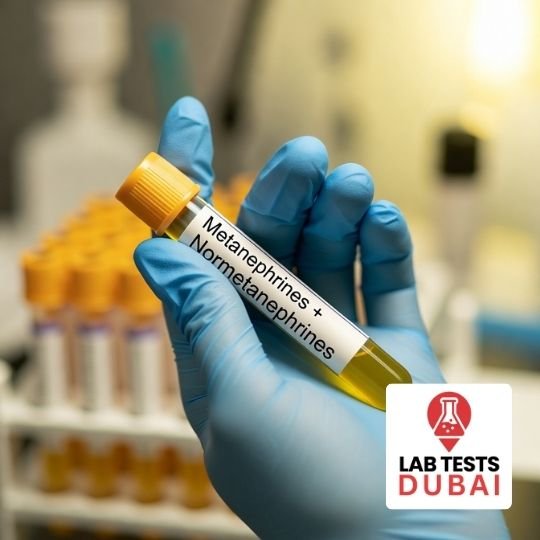
Metanephrines + Normetanephrines (24 Hour Urine)
950,00 د.إ
The Metanephrines Normetanephrines (24 Hour Urine) test is the specialized diagnostic tool designed to catch this invisible storm.
Sample Type : 24 Hour Urine
Methodology : HPLC – High Performance Liquid Chromatography
TAT : 10 Days
Description
Metanephrines Normetanephrines (24 Hour Urine) Lab Test
We have all felt the rush of adrenaline. It is the heart-pounding, palm-sweating surge that prepares us to fight or flee. It is a survival mechanism designed for short bursts of intensity. But imagine if that switch got stuck in the “on” position.
Imagine living in a state where your body is constantly flooding itself with stress hormones, even when you are sitting still.
This is the reality for individuals with a rare but serious condition affecting the adrenal glands. The Metanephrines Normetanephrines (24 Hour Urine) test is the specialized diagnostic tool designed to catch this invisible storm. By measuring the metabolic waste products of adrenaline and noradrenaline over a full day, this test can detect tumors that standard screenings often miss.
Why This Test Is a Diagnostic Necessity
Most blood pressure tests provide a snapshot of your health at a single moment. But for adrenal tumors like pheochromocytoma or paragangliomas, the symptoms often come in waves. One hour your blood pressure is normal; the next, it is dangerously high.
Because these tumors release hormones sporadically, a single blood draw can be misleading. The 24-hour urine collection captures the total output of these hormones over time, providing a comprehensive picture of adrenal activity.
This test is essential for:
- Confirming Diagnosis: It is the gold standard for diagnosing pheochromocytomas.
- Differentiating Causes: It helps doctors distinguish between essential hypertension and hormone-induced high blood pressure.
- Monitoring Recurrence: For patients who have had adrenal tumors removed, this test ensures the growth has not returned.
Recognizing the “Adrenal Storm”
The symptoms of excess adrenal hormones can be terrifying because they mimic severe anxiety or panic attacks, but the cause is purely physiological. You should consider this test if you experience:
- The “Surges”: Episodes of severe headaches, heavy sweating, and rapid heartbeat that seem to come out of nowhere.
- Uncontrollable Hypertension: High blood pressure that is difficult to control with standard medication.
- Physical Panic: Intense anxiety or feelings of doom that are not triggered by emotional events.
- Physical Changes: Unexplained weight loss, trembling, or dramatic fluctuations in skin color (flushing or extreme paleness).
If you have been treated for anxiety or high blood pressure without success, the root cause may lie in your adrenal glands.
The Biology: The Footprints of Stress
To understand the test, you have to look at the lifecycle of stress hormones.
When your adrenal glands produce adrenaline (epinephrine) and noradrenaline (norepinephrine), they do their job and then break down. The byproducts of this breakdown are metanephrines and normetanephrines.
Think of these metabolites as the “footprints” left behind by the hormones. These footprints are excreted in your urine.
- Normal State: You have a steady, manageable amount of these footprints.
- Tumor State: A pheochromocytoma acts like a broken faucet, flooding the system with hormones. This results in a massive spike in metanephrines in the urine.
By collecting every drop of urine for 24 hours, we ensure we don’t miss a “surge.”
The Cost of Ignoring the Symptoms
An undiagnosed adrenal tumor is a ticking time bomb. The constant bombardment of stress hormones wreaks havoc on the cardiovascular system.
If left untreated, these conditions can lead to:
- Hypertensive Crisis: A dangerous spike in blood pressure that can lead to stroke.
- Heart Damage: The heart is forced to work too hard for too long, leading to heart failure or arrhythmias.
- Organ Failure: The kidneys and other organs suffer under the strain of uncontrolled pressure.
- Malignancy: While often benign, these tumors can be malignant and spread to other parts of the body if not addressed.
Early detection isn’t just about feeling better; it is about preventing a medical emergency.
The “Chemical Diet”: How to Prepare
Because this test is so sensitive, the preparation is strict. You must ensure that you are not introducing external chemicals that mimic the ones we are trying to measure.
To ensure accuracy:
- The 24-Hour Commitment: You must collect all urine produced in a 24-hour period. This is crucial for the volume calculation.
- Avoid Amines: For 48 hours before and during the collection, you must avoid foods high in amines, including bananas, chocolate, vanilla, avocados, and cheese.
- No Stimulants: Avoid caffeine, alcohol, and tobacco.
- Medication Review: Certain medications (like antidepressants and some blood pressure meds) can interfere. Consult your doctor about what to pause.
The Test Overview
This test utilizes advanced technology to separate and quantify these specific molecules.
- Sample Type: 24-Hour Urine.
- Methodology: HPLC (High Performance Liquid Chromatography). This sophisticated technique separates the urine components to isolate metanephrines with high precision.
- Turnaround Time: 10 Days.
The complexity of the analysis and the duration of collection require a specialized timeline, but the results offer a definitive diagnosis.
Take Control of Your Adrenal Health
Don’t let a “mystery” illness rule your life. If you are battling unexplained blood pressure spikes or symptoms that feel like panic attacks, get the data you need.
The Metanephrines Normetanephrines (24 Hour Urine) test provides the clarity your medical team needs to treat the cause, not just the symptoms.
Book your lab test online today and ensure your body isn’t fighting a war that no one else can see.
Frequently Asked Questions – Metanephrines & Normetanephrines (24-Hour Urine)
What does this test measure?
This test measures the total amount of metanephrine and normetanephrine excreted in urine over 24 hours. These are breakdown products (metabolites) of epinephrine (adrenaline) and norepinephrine, hormones produced by the adrenal glands. Elevated levels can indicate rare but serious tumors like pheochromocytoma (adrenal) or paraganglioma (extra-adrenal).
Why is a 24-hour collection necessary?
Catecholamines and their metabolites are released intermittently, not continuously. A single “spot” urine sample can miss surges and yield false negatives. The 24-hour collection captures total daily production, offering far greater sensitivity for detecting hormone-secreting tumors.
When should I get tested?
Consider this test if you have:
– Episodic severe headaches, sweating, and rapid heartbeat
– Hypertension that’s hard to control or spikes suddenly
– Panic attack-like episodes without anxiety triggers
– Family history of pheochromocytoma, MEN2, or NF1
– An adrenal mass found on imaging
How should I prepare for the test?
To avoid false positives:
– Avoid caffeine, nicotine, alcohol, and acetaminophen for 48 hours before and during collection
– Minimize physical and emotional stress
– Follow a normal-salt diet (low salt can raise levels)
– Keep the urine container refrigerated or on ice during collection
– Collect every drop for exactly 24 hours
How soon will I get my results?
Thanks to liquid chromatography-mass spectrometry (LC-MS/MS) methodology, results are typically available within 5 business days. You’ll receive a detailed report with both metanephrine and normetanephrine levels and clinical interpretation.
Can medications affect the results?
Yes. Common culprits include:
– Tricyclic antidepressants
– MAO inhibitors
– Levodopa
– Decongestants (pseudoephedrine)
Always inform your doctor about all medications and supplements. In some cases, your doctor may advise temporarily stopping certain drugs under supervision.

Reviews
There are no reviews yet.