
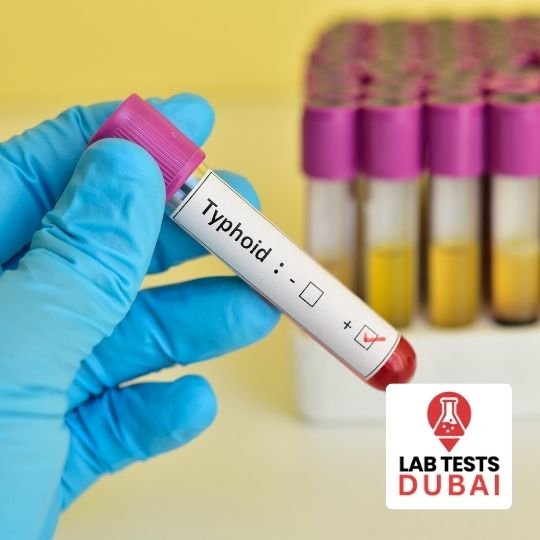
Typhi Dot IgG Test
450,00 د.إ
The Typhi Dot IgG test is a way to pull that specific file from the archives. It looks for the IgG antibodies your body produces to fight Salmonella typhi bacteria.
Sample Type : Serum
Methodology : Immunochromatography
TAT : 3 Days
Description
Typhi Dot IgG Test: Comprehensive Diagnostic Solution for Typhoid Fever Detection
You wake up with a dull headache that coffee can’t touch. By afternoon, a fever wraps around you like a heavy cloak, and your body aches with a familiar, flu-like exhaustion. Yet, something feels different. It’s a persistent, grinding illness that settles in, day after day. You might dismiss it, but your body is already mounting a sophisticated defense, creating a hidden record of the battle within.
This isn’t just another virus. This could be typhoid fever, a stealthy bacterial infection with potentially serious consequences. Diagnosis can be tricky, caught between symptoms and suspicion. This is where modern medicine turns detective, seeking not the invader itself, but the unique fingerprint it leaves behind: the Typhi Dot IgG test.
The Test That Listens to Your Immune System’s Story
Think of your immune system as a meticulous archivist. Every time it encounters a new pathogen, it creates a file, a specific antibody. The Typhi Dot IgG test is a way to pull that specific file from the archives. It doesn’t look for the Salmonella typhi bacteria directly; it looks for the IgG antibodies your body produces to fight it.
Why is this important? Because IgG is the antibody of memory and endurance. While other antibodies spike during an active fight, IgG appears a bit later and, crucially, persists. A positive result is like finding a dated entry in the logbook. It tells your doctor one of two things:
An Ongoing or Recent Battle: You are currently fighting, or have recently fought, a typhoid infection.
Historical Exposure: You were infected in the past, and your immune system retains the blueprint.
This distinction is powerful. It moves the diagnosis from a guess based on symptoms to an evidence-based conclusion about your body’s specific immune history.
When This Test Becomes Your Compass
The classic symptoms of typhoid are a constellation of misery: a high, sustained fever, profound weakness and fatigue, abdominal pain, and sometimes a distinctive rose-colored rash. But in a world of overlapping illnesses, certainty is gold.
The Typhi Dot IgG test is your compass when:
Symptoms are persistent but unclear, and rapid tests are negative or inconclusive.
You’ve traveled or live in an area where typhoid is endemic, and the context points to exposure.
You need to rule out a chronic carrier state, a scenario where the infection is gone, but the bacteria linger, potentially spreading to others.
Monitoring recovery after treatment, ensuring the immune response is subsiding as expected.
It’s a critical piece of the diagnostic puzzle, transforming a list of symptoms into a directed narrative of your health.
The High Cost of “Wait and See”
Typhoid fever is not an illness to weather at home with rest and fluids. Untreated, the bacteria can invade beyond the intestines, leading to catastrophic complications. The fear isn’t just a prolonged fever; it’s intestinal perforation, severe hemorrhage, or sepsis, conditions that are medical emergencies.
Early, accurate diagnosis via tools like the Typhi Dot IgG test bridges the gap between onset and effective antibiotic treatment. It cuts the timeline of uncertainty, protecting not just you, but your community, by preventing transmission.
A Simple Test with Profound Implications
The procedure itself is straightforward: a standard blood draw. The science happening in the lab is where the elegance lies. Using a method called immunochromatography, essentially a highly specific antibody-detecting strip—technicians can visualize the presence of Typhi IgG in your serum.
Within a few days, this simple blood sample can yield a result that steers your entire treatment course. No complex preparation, no invasive procedures, just intelligent science interpreting the silent language of your immune system.
The Bigger Picture: Knowledge as the First Step to Health
Choosing to take this test is a decision to move from passive patient to active investigator in your own health. It’s an acknowledgment that in our interconnected world, illnesses know no borders, and precision is our greatest tool.
Your body is telling a story. It’s time we listened with the most advanced tools we have. Book your test today with Lab Tests Dubai.
Frequently Asked Questions – Typhi Dot (IgG) Test
What is the Typhi Dot (IgG) test?
The Typhi Dot IgG test is a rapid immunoassay that detects Immunoglobulin G (IgG) antibodies against Salmonella typhi, the bacteria that causes typhoid fever. IgG antibodies develop later in infection and can persist for months or years, indicating **past exposure, resolved infection, or chronic carrier status.
When should I take this test?
This test is useful if you:
– Had typhoid-like symptoms weeks or months ago
– Are being evaluated as a possible chronic carrier (e.g., food handlers, healthcare workers)
– Need proof of past exposure for occupational health screening
– Are experiencing recurrent abdominal issues after a suspected typhoid episode
It is ideal for diagnosing acute fever, use the Typhi Dot IgM test for that instead.
How does IgG differ from IgM in typhoid testing?
IgM appears early (within 5–7 days of infection) and signals acute or recent typhoid fever.
IgG rises later (after 10–14 days) and remains elevated long-term, indicating past infection or immunity.
Many clinicians order both IgM and IgG together to distinguish between current, recent, and historical exposure.
Do I need to fast before the test?
No fasting is required. A simple blood draw is all that’s needed. No special preparation is necessary.
What does a positive IgG result mean?
A positive IgG result suggests you’ve been exposed to Salmonella typhi in the past. It does not confirm an active infection. However, if you’re asymptomatic but IgG-positive, you may be a chronic carrier, especially if you work in food service or healthcare. Further testing (like stool culture) may be needed to rule out carrier status.
How soon will I get my results?
Thanks to rapid dot immunoassay technology, results are typically available within 24 hours. You’ll receive a secure digital report indicating whether IgG antibodies were detected, helping your doctor assess your typhoid history or carrier risk.




Reviews
There are no reviews yet.