Proven Steps To Choose The Best STD Test At Home Service In Dubai
Test selection begins with verifying accreditation and lab credentials; you should demand accredited labs and high-sensitivity tests. Check sample collection methods, licensed staff, turnaround time and clear result reporting; prioritize services that guarantee confidentiality and secure delivery. Compare pricing, reviews, and post-test support so you can act fast if results show infection-untreated STDs can cause serious health complications, so choose a reliable provider for your safety.
STD testing at home can safeguard your health, so you should choose a service that offers accurate, lab-certified results, discreet sample collection, and fast turnaround; evaluate licensed laboratories, clear test panels, secure data handling, and professional follow-up to avoid missed infections that could lead to serious complications, confirm easy booking, transparent pricing, and positive patient reviews to ensure reliable care, and prioritize providers that offer telehealth consultation and clear instructions so you can act confidently on your results.
Key Takeaways:
- Confirm lab accreditation and licensing (DHA/MOHAP recognition, ISO/CAP or equivalent) to ensure reliable processing.
- Choose a service with appropriate test panels and methods (PCR/NAT for early detection, antibody tests where applicable) and clear sensitivity/specificity information.
- Prioritize strict privacy, discreet packaging, secure data handling, and compliance with UAE telemedicine and health regulations.
- Prefer services offering flexible, supported sample collection (self-collection instructions, telehealth guidance, or trained phlebotomists) and reliable specimen transport.
- Compare transparent pricing, turnaround times, and availability of post-test support such as counseling, treatment referrals, and follow-up testing.
Key Takeaways:
- Verify lab accreditation and licensing with local UAE/Dubai health authorities and ISO standards to ensure reliable testing.
- Confirm the test panel covers HIV, syphilis, chlamydia, gonorrhea, hepatitis B/C (and others you need) and check sensitivity/specificity or regulatory approvals (FDA/CE).
- Choose convenient, validated sample collection methods (blood, urine, swab) with clear instructions or a trained phlebotomist and secure same-day pickup or courier.
- Prioritize services with discreet packaging, encrypted result delivery, strict confidentiality policies, and access to counseling or referral pathways.
- Compare turnaround time, transparent pricing, availability of confirmatory testing, and telemedicine or treatment follow-up options.
Understanding STDs and Their Importance
Common Types of STDs
You need to recognize major infections across viral, bacterial and parasitic categories; viral examples like HIV and HPV can be persistent, while bacterial ones such as Chlamydia, Gonorrhea and Syphilis often respond to antibiotics but may remain asymptomatic for months. This table outlines key features and risks.
- HIV
- HPV
- Chlamydia
- Gonorrhea
- Syphilis
| HIV | Over 38 million people living with HIV globally; requires blood testing and lifelong antiretroviral therapy to suppress virus. |
| HPV | Very common; most infections clear within ~2 years, but high‑risk types can cause cervical and other cancers; vaccination prevents many cases. |
| Chlamydia | One of the most reported bacterial STIs; often asymptomatic in women and can lead to pelvic inflammatory disease if untreated. |
| Gonorrhea | Increasing antibiotic resistance in many regions; can cause infertility and systemic infection if not properly treated. |
| Syphilis | Multistage infection that can cause long‑term neurologic and cardiovascular damage when left untreated; diagnosed by serology. |
Symptoms and Consequences
You should expect a wide range of presentations: many infections are silent-up to 70% of women with Chlamydia may have no symptoms-while others cause discharge, sores, or fever; untreated STDs can lead to infertility, neonatal transmission, systemic disease and higher HIV acquisition risk. Seek testing after exposure or before starting a new sexual relationship to reduce personal and public health harm.
You also need to know timing and outcomes: HPV clears in about 90% of cases within two years, whereas untreated Syphilis can progress over years to cause neurologic or cardiac injury; rising Gonorrhea resistance means accurate lab identification and follow‑up are vital for effective treatment.
Understanding STDs and Testing
Global data show about 1 million new sexually transmitted infections every day, so your testing choice must account for accuracy and timing. You should know that NAAT (nucleic acid amplification) is the gold standard for chlamydia/gonorrhea, while HIV fourth‑generation and RNA/PCR tests have different window periods-RNA detects earliest (around 7-14 days), fourth‑gen detects p24 and antibodies (commonly 2-6 weeks). Match the test type to your exposure timeline and choose lab‑processed home kits for best sensitivity.
Common STDs and Their Symptoms
You’ll encounter chlamydia, gonorrhea, syphilis, HIV, HSV (herpes), HPV and hepatitis B/C most often; symptoms vary from urethral/vaginal discharge and painful urination to ulcers, rashes or systemic fever. Many infections are silent-chlamydia may be asymptomatic in up to 70% of women-so absence of symptoms doesn’t rule out infection. Prioritize tests based on exposure type and local prevalence.
Importance of Regular Testing
You should test routinely: at minimum annually if sexually active, and every 3 months if you have multiple partners, new partners, or condomless sex. Early detection prevents complications like pelvic inflammatory disease or chronic hepatitis, and enables prompt treatment that reduces onward transmission. Choose a service offering clear timelines, discrete sampling, and lab confirmation.
To act on testing intervals, match test choice to timing: RNA/PCR for earliest HIV detection (≈7-14 days), fourth‑generation for 2-6 weeks, and NAAT for chlamydia/gonorrhea within days after exposure. If you’re diagnosed, confirmatory testing and timely treatment matter-antiviral therapy can suppress HIV to undetectable levels (U=U), and treating bacterial STIs quickly cuts community spread and long‑term sequelae.
Benefits of At-Home STD Testing
You gain rapid, private screening without clinic wait times: many reputable services process samples and deliver results within 24-72 hours. Tests commonly cover chlamydia, gonorrhea, HIV and syphilis in single panels, with high-quality assays often reporting >99% sensitivity for HIV when used after the appropriate window period. Be aware that testing too early can produce false negatives, so timing and follow-up testing matter for reliable detection.
Privacy and Confidentiality
When you order a kit, labs use anonymized accession numbers and encrypted portals so your identity is not attached to results in plain view; many providers operate with ISO-accredited or nationally licensed partner labs. Packaging is discreet, and two-factor access to results plus optional telemedicine consultations means you control who sees your report while still getting professional interpretation.
Convenience and Accessibility
You can collect samples in 5-10 minutes at home using finger-prick blood, urine or self-swabs, then return them by prepaid courier or drop-off. Services typically offer clear instructions, multilingual support and result delivery to your secure account, making testing feasible outside normal clinic hours and for busy or remote residents.
For deeper convenience, check whether the provider offers same-day kit dispatch and courier pickup in Dubai, and whether panels include the infections you need-standard panels test roughly 3-8 conditions. Many platforms bundle telehealth follow-up and prescriptions for confirmed infections, so you get diagnosis to treatment without additional clinic visits, saving time and reducing exposure risk.
Benefits of At-Home STD Testing Services
You gain rapid, private screening without clinic waits, letting you act faster on treatment if needed. Many services connect you to DHA-accredited labs, offer discreet courier pickup and deliver results via secure portals, typically within 24-72 hours. You also lower exposure risk compared with in-person visits and can choose focused panels (HIV, chlamydia, gonorrhoea, syphilis) to match your risk, often at lower total time and logistical cost than multiple clinic appointments.
Convenience and Privacy
You order tests online, schedule a trained phlebotomist or self-collection kit at your preferred time, and avoid waiting rooms and possible stigma. Providers use discreet packaging and encrypted portals so your results stay private; many platforms let you share documentation electronically with a physician for follow-up care. Payment and booking are handled digitally, which speeds the process and keeps interactions minimal and confidential.
Accessibility of Services in Dubai
You can access at-home STD testing across Dubai’s urban areas through multiple private providers and labs, with most offering same-day pickup inside the city and coverage in major neighbourhoods like Marina, Deira and Al Barsha. High demand from an expatriate-majority population (around 85% expats) has expanded language support, teleconsultations and lab capacity, making testing broadly available.
Service reach often extends beyond central Dubai to surrounding suburbs and nearby Emirates, and many providers publish coverage maps and cut-off times for pickups. Prices typically vary by panel, with basic tests often starting around AED 150 and comprehensive panels up to AED 800, and turnaround and follow-up teleconsults are commonly included or offered as add-ons for clear next-step management.
Key Factors to Consider When Choosing an At-Home Testing Service
- Regulatory compliance – DHA/MOHAP registration and local licensure
- Lab accreditation – ISO 15189, CAP or UKAS
- Test panel – which STIs are included (HIV, syphilis, chlamydia, gonorrhea, HPV, hepatitis)
- Sample type – urine, finger-prick blood, vaginal/rectal swab options
- Turnaround time – 24-72 hours vs. multi-day reporting
- Accuracy – NAAT vs. rapid antigen/antibody tests
- Privacy – discreet packaging, secure results portal
- Cost & coverage – out-of-pocket price, insurance/reimbursement
You should focus on specific capabilities: whether the provider uses NAAT for chlamydia/gonorrhea, offers HIV 4th‑gen testing, and supports self-swabs with clear instructions; check if results return within 24-72 hours and whether discrete couriering is available. Assume that you verify the lab’s ISO 15189 or DHA registration, NAAT-based panels with >95% sensitivity, and 24-72 hour turnaround before ordering.
Accreditation and Certification
You want providers whose partner labs hold recognized credentials: ISO 15189 (medical lab standard), CAP or UKAS accreditation, and local DHA or MOHAP licensing in the UAE. These accreditations mean documented quality systems, external audits, and validated methods; for example, ISO 15189 labs undergo biennial assessments and proficiency testing rounds, which reduces analytical errors and improves traceability for your results.
Test Accuracy and Reliability
You should prioritize tests with published performance: NAAT for chlamydia/gonorrhea typically shows >95% sensitivity and >99% specificity, while HIV 4th‑generation assays reach ~99.7% sensitivity after the 3-4 week window; rapid antibody tests have longer windows and lower early sensitivity. Confirmatory algorithms (PCR/Western blot) should be in place for reactive results to avoid false positives.
More detail matters: studies show self-collected vaginal swabs achieve ~92-98% sensitivity versus clinician swabs for chlamydia when instructions are clear, and proper cold‑chain or same‑day transport keeps NAAT performance stable-delays over 72 hours can raise false negatives. Pay attention to limit of detection (copies/mL) for molecular tests, whether multiplex NAATs are used, and if the lab runs external proficiency panels; these factors directly affect the reliability and the risk of missed infections in your results.
Factors to Consider When Choosing an At-Home STD Test
Evaluate sample type, lab linkage, result speed, and post-test support; prefer services that show clear privacy policies, transparent pricing, and verified chain-of-custody. Check turnaround times like 24-72 hours for lab-processed blood or NAAT results and confirm available post-test counselling. Prioritise services that list accredited labs and on-call clinicians. Thou verify live support and written lab reports before ordering.
- Accuracy
- Turnaround time
- Privacy
- Lab accreditation
- Post-test support
| Factor | Why it matters / Example |
| Accuracy | High-sensitivity NAATs >95% reduce false negatives |
| Turnaround time | Faster results (24-72 hrs) speed treatment decisions |
| Privacy | Discrete packaging, GDPR-like policies, limited data sharing |
| Lab accreditation | DHA or ISO 15189 shows tested quality and oversight |
| Support | Post-test counselling and clinician referral options |
Accreditation and Certification
You should confirm the provider partners with labs holding DHA or ISO 15189 accreditation, and ideally external quality assessments (EQA) or CAP participation; such credentials track assay validation and staff competence. Expect documented quality controls and batch traceability, plus lab contact information on reports. Verify licensing and published proficiency data before trusting results.
Types of Tests Offered
You need to match tests to exposure and symptoms: NAAT for chlamydia/gonorrhoea (urine or swab), 4th‑gen HIV tests (antigen/antibody), serology for hepatitis and syphilis, and PCR or culture where indicated. Confirm sample method and specimen stability instructions. The
- NAAT (Chlamydia/Gonorrhoea)
- HIV 4th‑gen
- Syphilis serology
- Hepatitis B/C tests
- HSV IgG/PCR
| Test | Sample / Typical accuracy |
| Chlamydia / Gonorrhoea (NAAT) | Urine or vaginal/urethral swab; >95% sensitivity |
| HIV 4th‑gen | Blood (venous or fingerstick); detects p24 + antibodies ~18-day window |
| Syphilis (TP/FTA/IgM) | Blood serology; confirmatory testing needed for positives |
| Hepatitis B / C | HBsAg / anti-HCV blood tests; follow-up PCR for active infection |
| HSV | Swab PCR for lesions; IgG for past exposure |
You should know that NAAT offers the highest sensitivity for genital infections, while 4th‑generation HIV cuts the window period to about 2-3 weeks; rapid fingerstick tests trade sensitivity for immediate results and typically report lower detection in early infection. If you had recent exposure, check recommended retest intervals (e.g., 2-12 weeks by infection). The
- NAAT sensitivity
- HIV 4th‑gen window
- Rapid test limits
- Follow-up PCR
- Retest timing
| Point | Practical detail / Example |
| NAAT | Best for chlamydia/gonorrhoea; urine stability 24-48 hrs refrigerated |
| HIV 4th‑gen | Detects p24 ~18 days; confirm positives with Western blot/PCR |
| Rapid tests | Results in 15-30 mins; use for screening, confirm with lab test |
| Serology | Useful for hepatitis and syphilis; may require confirmatory assays |
| Specimen handling | Follow instructions precisely to avoid invalid samples |
Comparing Available At-Home STD Testing Services in Dubai
| Service/Feature | Typical Range / Example |
|---|---|
| Test types | HIV, chlamydia, gonorrhea, syphilis, hepatitis B/C; panels of 3-12 tests |
| Collection method | Self-swab, urine, finger‑prick, or venous draw (home phlebotomy) |
| Turnaround time | 24-72 hours typical; expedited 6-12 hours for additional fee |
| Price examples | Single tests AED 100-300; common panels AED 250-700; home visit AED 100-250 extra |
Service Offerings and Types of Tests
You can pick between single-target tests and bundled panels that cover 3-12 pathogens, with sample types ranging from urine and self-swabs to finger-prick or venous collection by a phlebotomist. Turnaround often runs 24-72 hours, and some providers link results to a teleconsultation within 1-2 days. Knowing which specific panel includes HIV and syphilis will determine whether you need a basic screen or a comprehensive panel.
- Panel size: 3-12 tests
- Sample type: urine, self-swab, finger‑prick, venous draw
- Test targets: HIV, chlamydia, gonorrhea, syphilis, hep B/C
- Turnaround: 24-72 hours (expedited 6-12h)
- Accreditation: DHA / ISO lab partners
Pricing and Insurance Options
Providers publish prices from about AED 100 for individual tests to AED 250-700 for multi‑test panels; a home phlebotomy visit typically adds AED 100-250. Many insurers will not reimburse direct-to-consumer kits, but will cover lab billing if the test is performed through a network partner and preauthorization is secured. You should check policy limits, in‑network lab lists, and whether telehealth consults are included with the test.
For example, a standard 6‑test STI panel often costs AED 350-550; if your employer plan lists partner labs, the provider may bill insurers directly, avoiding out‑of‑pocket payment. You will usually need prior authorization for diagnostic testing under employer or private plans, and out‑of‑network claims require detailed receipts and lab codes (CPT/ICD equivalents). Always verify whether the lab is in-network and confirm reimbursement rules before booking to avoid unexpected expenses.
Evaluating Service Providers
Check providers for DHA, ISO 15189, or CAP accreditation, clear test panels (HIV, syphilis, chlamydia, gonorrhoea, hepatitis B/C), and published turnaround times (commonly 24-72 hours for PCR). Compare sample-collection options (home nurse vs self-swab), documented chain-of-custody for confirmatory positives, and transparent pricing with itemised fees so you can avoid hidden charges or delayed results.
Customer Reviews and Testimonials
Scan both volume and pattern: aim for providers with 100+ independent reviews and average ratings above 4.5/5, and weigh comments about confidentiality, nurse punctuality, and result accuracy. Watch for repeated complaints about slow follow-up or missing confirmatory steps; cross-check testimonials on Google, Trustpilot, and local health forums to reduce the risk of fake or incentivised reviews.
Consultation and Support Services
Prioritise services that include licensed clinician consultations, same-day or 24‑hour callback for positive results, and clear pathways to treatment or referral; bilingual telemedicine and discreet post-test counselling are strong positives. Verify whether follow-up counselling and specialist referrals are included or billed separately before you book.
Ask about clinician credentials (MD, specialist, or licensed nurse), typical wait times for a post-test consult (ideally within 24-48 hours), and how positive results are handled-example: some providers arrange confirmatory PCR and direct referral to a DHA-licensed clinic within a day. Confirm data-protection measures, documented consent processes, and whether they provide written care plans or prescriptions when indicated.
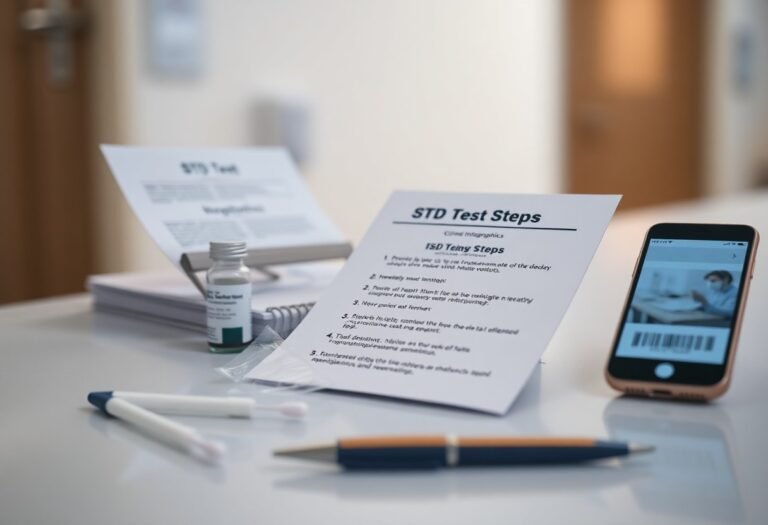
Step-by-Step Guide to Using an At-Home STD Test
Step-by-Step Breakdown
| Step | What you do |
| Ordering | Choose tests, verify lab accreditation, select discreet delivery and turnaround time (e.g., 24-72 hours), pay securely. |
| Collecting | Follow kit instructions: first-catch urine, swabs, or finger-prick blood; label samples exactly as directed. |
| Sending | Use the provided packaging and pre-paid courier; ship same-day when possible to protect sample integrity. |
| Results | Receive secure online report or phone consult; positive results often trigger confirmatory testing and counselling options. |
Ordering the Test
You should verify the test panel (HIV, syphilis, chlamydia, gonorrhea, hepatitis) and pick a provider with DHA-approved or ISO 15189 accreditation, clear pricing, and a stated turnaround time of 24-72 hours; choose discreet packaging and confirm whether confirmatory testing or telehealth follow-up is included.
Collecting and Sending Samples
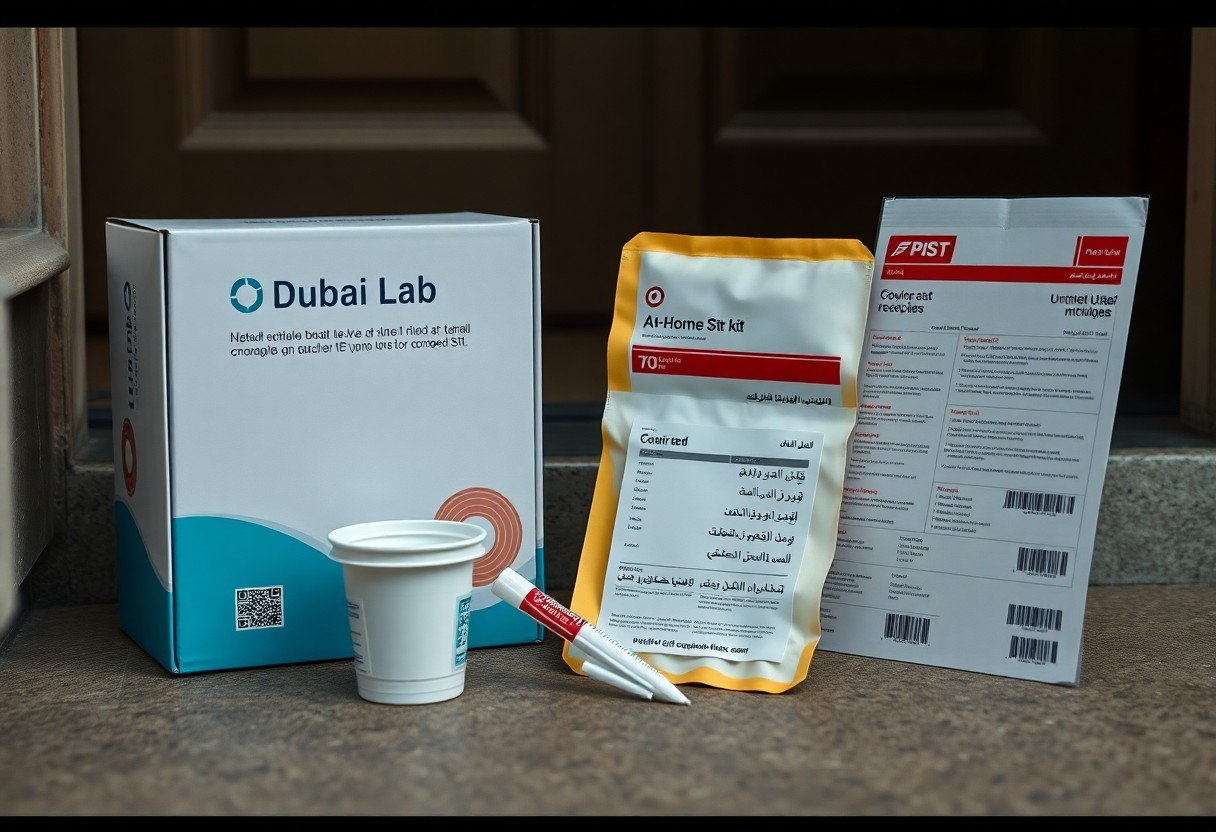
You must follow kit instructions exactly: collect first-catch urine for chlamydia/gonorrhea, take a vaginal or penile swab per directions, or collect 2-3 drops of capillary blood; label samples, seal in the provided biohazard bag, and arrange the same-day courier to avoid delays that increase the risk of false negatives.
For more detail, collect the first 20-30 mL of urine after at least 1 hour without urinating, insert vaginal swabs 2-3 cm and rotate 10-20 seconds, and wipe away the first drop before finger-prick blood collection; avoid exposing specimens to extreme heat (Dubai summer >40°C) and follow storage instructions-do not refrigerate or freeze unless the kit specifies-then use the pre-paid courier or lab drop-off immediately.
Understanding the Testing Process
Processing times vary: rapid point-of-care tests give results in 15-30 minutes while lab-based assays usually return results within 24-72 hours. You should know which assay is used-NAATs detect bacterial RNA/DNA with >95% sensitivity, 4th-generation HIV assays pick up p24 antigen earlier, and serology may reflect past exposure. Labs also run confirmatory tests for reactive results, so an initial positive often triggers secondary testing and counselling.
Sample Collection Methods
Blood draws (venous) and fingerstick tests differ: venous samples support multiple assays, while fingerstick suits rapid kits. Urine is standard for male chlamydia/gonorrhea NAAT; self-collected vaginal swabs for women often match clinician-collected sensitivity (~92-98%). Swabs from lesions, throat or rectum are used based on exposure. You must follow kit instructions exactly and ensure correct labelling and same-day courier pick-up to protect sample integrity.
Results Interpretation
When you receive results, outcomes are typically non-reactive, reactive, or indeterminate; reactive often needs confirmatory testing (e.g., PCR or supplemental serology). Tests differ in sensitivity and specificity-rapid antibody kits have high specificity (~99%) but wider window periods can cause false negatives. Check the assay type and window period on the report to judge reliability for recent exposures.
For example, HIV 4th-generation assays detect p24 antigen and antibodies, narrowing the window to about 15-20 days, while NAAT can detect RNA around 7-10 days; syphilis treponemal tests remain positive long-term whereas RPR titres track treatment response. Chlamydia/gonorrhea NAATs exceed 95% sensitivity, but HSV serology can yield low-positive results at low prevalence and needs clinical correlation. You should escalate any reactive or indeterminate result to confirmatory testing and clinical assessment.
Interpreting Your Test Results
Check the assay type on your report-antigen/antibody, NAAT, or PCR-and compare against known window periods: HIV 4th‑generation detects p24 antigen around 2-6 weeks and antibodies by ~12 weeks, while NAATs for chlamydia/gonorrhea have >95% sensitivity. Early testing can produce false negatives, and reactive results should be treated as actionable: confirm, notify partners, and link to care to avoid complications like untreated systemic disease.
Understanding Positive and Negative Results
A positive (reactive) result means markers of infection were detected; for HIV a reactive 4th‑gen requires confirmatory PCR or differentiation, and syphilis typically needs both treponemal and non‑treponemal assays. A negative (non‑reactive) result does not rule out recent exposure-if your exposure was within the window period, repeat testing at recommended intervals such as 2, 6 and 12 weeks to be sure.
Next Steps After Receiving Results
If you receive a positive result, arrange confirmatory testing and link with a clinician promptly; bacterial STIs like chlamydia/gonorrhea are usually curable with antibiotics and you should abstain from sex until treatment is complete and provider‑cleared. For HIV, confirm with viral load testing and begin antiretroviral therapy as soon as possible to reduce transmission and preserve immune function; also notify recent partners so they can test.
Book confirmatory assays at an accredited lab-NAAT turnaround is often 24-72 hours, HIV PCR/viral load typically takes 2-7 days. If treated, follow test‑of‑cure guidance: retest gonorrhea/chlamydia at 2-4 weeks if indicated, and monitor syphilis titers at 3, 6 and 12 months. Keep documentation for follow‑up visits and consider partner notification services to limit further spread.
Cost Considerations and Insurance Coverage
Expect at-home STD testing in Dubai to vary widely: AED 150-300 for single tests and AED 500-1,200+ for comprehensive panels, with home-collection fees typically adding AED 50-200. You should factor in turnaround time premiums (same-day or 24‑hour), courier charges, and lab accreditation when comparing offers; total out-of-pocket cost often differs from advertised package prices.
Pricing Structure of Services
Vendors price tests either per assay or as bundled panels, and bundles usually save 20-40% versus individual test pricing. Many providers list base lab fees plus separate home-visit or courier charges, and expedited reporting adds a surcharge. When you compare, request an itemized invoice showing test costs, sample collection, processing, and any additional administrative or disposal fees.
Insurance Policies and STD Testing
Coverage varies: insurers often pay for STD testing when it’s medically indicated-for symptomatic care, prenatal screening, or documented exposure-but may deny tests done for routine screening or travel requirements. You should verify network lab lists, pre-authorization rules, co-pay percentages (often 10-20%), and whether a physician referral or ICD code is required to avoid claim rejection.
If the test is for employment, immigration, or screening without a treating physician, expect insurers to reject claims; conversely, tests tied to a clinical visit or pregnancy are more likely covered. You should call your insurer to confirm specific CPT/ICD codes, ask whether the at-home collection vendor is in-network, and check whether claim details will appear on your insurer portal, since privacy of results can be affected when claims are processed through corporate or family plans.
Summing up
Upon reflecting, you should prioritize accredited labs and validated assays, check discreet delivery and secure data handling, confirm sample collection simplicity and clear instructions, compare test panels and turnaround times, verify availability of medical consultation and reliable customer reviews, and weigh transparent pricing and refund policies – these proven steps will help you confidently select the best at-home STD testing service in Dubai for your needs.
To wrap up
Summing up, when selecting an at-home STD test service in Dubai you should verify lab accreditation, test panel completeness, discreet packaging and clear instructions, swift confidential results, qualified customer support, and transparent pricing and follow-up options; prioritize services that partner with accredited labs and offer secure sample handling so you can trust accuracy and protect your privacy.
FAQ
Q: How do I verify the credibility of an at-home STD testing service in Dubai?
A: Verify that the service is licensed for home healthcare by the Dubai Health Authority (DHA) or relevant UAE regulator, and that the partner laboratory holds international or regional accreditation such as ISO 15189 or CAP. Confirm physician oversight for test selection and result interpretation, check for clear chain-of-custody procedures for samples, and review transparent policies on quality control, sample transport, and staff training.
Q: Which specific tests and testing technologies should I expect for accurate results?
A: Expect nucleic acid amplification tests (NAAT/PCR) for chlamydia and gonorrhea, 4th-generation antigen/antibody assays for HIV, treponemal and non-treponemal testing for syphilis, and validated serology or PCR for hepatitis B and C. The service should list test sensitivity and specificity, explain window periods for each infection, and offer confirmatory testing workflows for any reactive/positive results.
Q: How can I assess privacy, data security, and discreet sample handling?
A: Check for encrypted patient portals, limited-access medical records, and written confidentiality policies; confirm that bookings and results are delivered by secure channels (SMS/email with secure links or app notifications). Ensure samples are collected in sealed, labeled containers, transported in tamper-evident packaging by trained couriers, and that the provider documents secure chain-of-custody and compliant medical waste disposal.
Q: What logistical factors and turnaround times should influence my choice?
A: Compare appointment availability (same-day vs scheduled), options for a trained phlebotomist visit versus validated self-collection kits, and laboratory processing times (standard vs express). Evaluate total turnaround from collection to result delivery, transparent pricing with itemized fees, refund or repeat-test policies for invalid samples, and whether the service can coordinate follow-up care or referrals if needed.
Q: What post-test support and care linkage should a reputable service provide?
A: The provider should offer clinical interpretation of results by a qualified clinician, clear next-step recommendations, prompt confirmatory testing for positives, confidential counseling (emotional and sexual-health guidance), and referral pathways to specialists or treatment centers in Dubai. Also verify availability of partner-notification support, documented follow-up testing schedules, and prescription or treatment facilitation when medically indicated.