
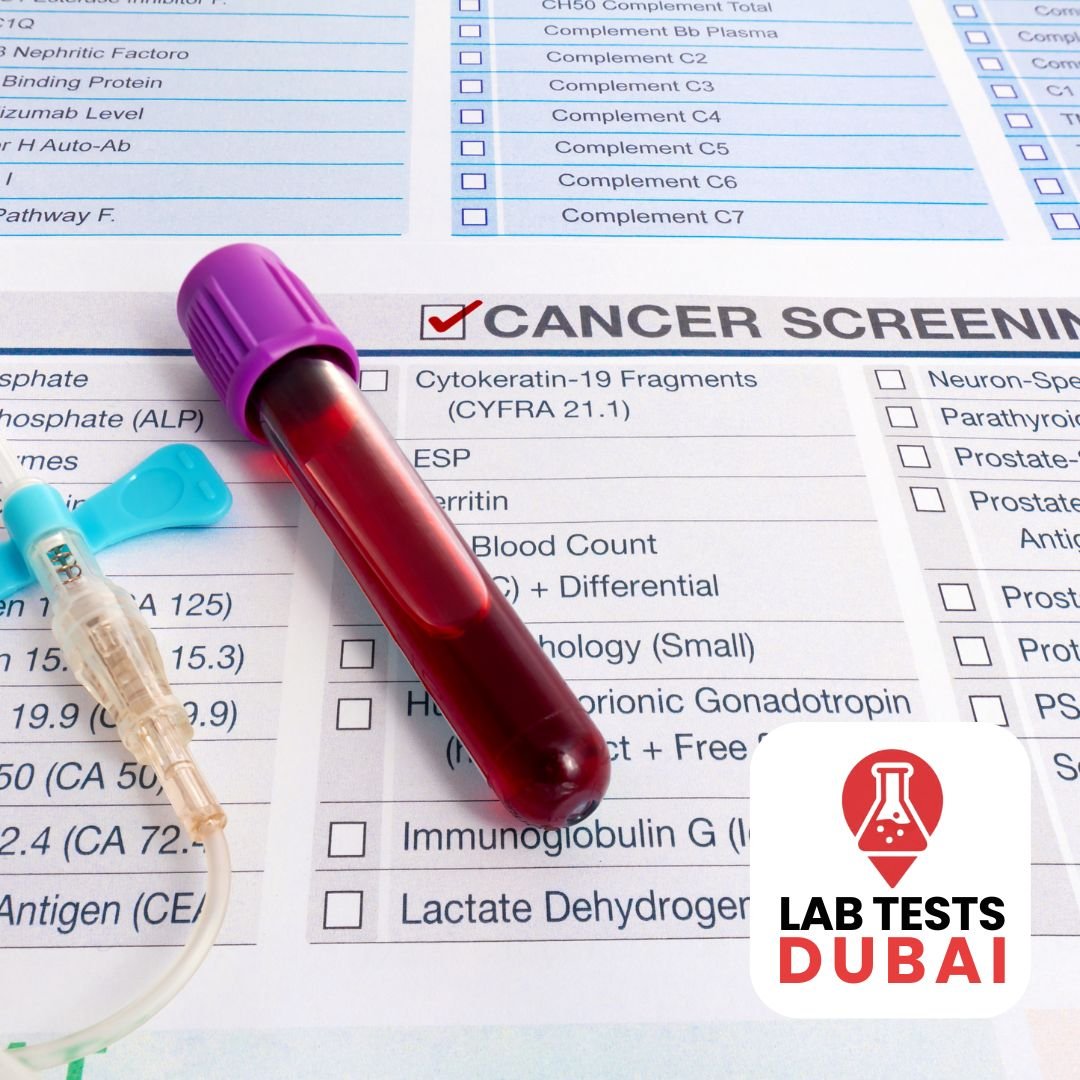
Male Cancer Marker Panel – Early Blood Test for Prostate, Liver & Pancreatic Cancer
650,00 د.إ
Includes the following parameters:
- Alpha-Fetoprotein (AFP)
- CA 19.9, Serum (Pancreatic Cancer Marker)
- Carcinoembryonic Antigen (CEA), Serum
- Prostate-Specific Antigen (PSA), Total Serum
- Prostate-Specific Antigen (PSA), Free Serum
- Human Chorionic Gonadotropin (HCG)
Description
Why You Need This Test
The Male Cancer Marker Panel is a comprehensive blood test designed to detect early signs of prostate, liver, pancreatic, testicular, and gastrointestinal cancers, some of the most common and serious cancers affecting men.
This panel measures key tumor markers in the blood that can signal the presence of malignant cells, even before symptoms appear. Early detection significantly improves treatment success and survival rates, making this test a vital part of preventive healthcare for men, especially those with:
- A family history of cancer
- High-risk lifestyle factors
- Unexplained symptoms such as fatigue, weight loss, or abdominal pain
Regular screening allows for timely intervention , monitoring of treatment progress , and early detection of recurrence .
 Symptoms That Indicate This Test
 Symptoms That Indicate This Test
You should consider the Male Cancer Marker Panel if you experience:
- Unexplained weight loss
- Persistent fatigue or weakness
- Abdominal pain, bloating, or jaundice (liver/pancreatic concerns)
- Changes in bowel habits (diarrhea, constipation, blood in stool)
- Blood in urine or semen
- Lump or swelling in the testicles
- Frequent urination, weak urine flow, or pelvic discomfort (prostate issues)
- Persistent cough or difficulty swallowing
- Chronic back or pelvic pain
Even in the absence of symptoms, men over 40 or with a family history of cancer should consider regular screening.
How the Body Produces These Markers
Cancer markers are proteins or substances produced either by cancer cells or by the body in response to cancer . While some may be elevated due to benign conditions, persistently high levels can indicate malignancy.
This panel includes:
- Alpha-Fetoprotein (AFP): Normally produced during fetal development; elevated in adults may indicate liver cancer or testicular germ cell tumors .
- CA 19.9: A marker for pancreatic cancer and other gastrointestinal cancers, produced by abnormal cells in the pancreas or bile ducts.
- Carcinoembryonic Antigen (CEA): Low in healthy adults; elevated levels may suggest colorectal, lung, or GI cancers .
- Prostate-Specific Antigen (PSA), Total & Free: Produced by the prostate gland; high levels may indicate prostate cancer , BPH , or inflammation .
- Human Chorionic Gonadotropin (HCG): A hormone typically linked to pregnancy; in men, elevated levels can signal testicular cancer or rare tumors.
Monitoring these markers helps detect cancer early and assess treatment effectiveness.
What Happens If Cancer Markers Are Elevated and Left Unchecked?
Ignoring elevated cancer markers can have serious consequences:
- Cancer progression to advanced stages , reducing treatment options
- Metastasis (spread to other organs like bones, liver, or lungs)
- Delayed diagnosis leading to more aggressive therapies
- Organ damage (e.g., liver failure, kidney dysfunction)
- Reduced survival rates
Early detection through the Male Cancer Marker Panel enables timely consultation with specialists, lifestyle changes, and potentially life-saving interventions.
How to Prepare for the Test
To ensure accurate results:
- No fasting required unless otherwise advised by your doctor.
- Avoid alcohol and heavy meals the night before, as they can affect liver-related markers (AFP, CEA).
- Inform your doctor about medications , especially those for prostate health (e.g., finasteride) , hormone therapy , or liver conditions .
- For PSA testing , avoid ejaculation, vigorous exercise, or prostate exams for 24–48 hours before the test, as these can temporarily elevate PSA levels.
The test involves a simple blood draw and is performed at certified labs across Dubai.
Test Overview
| Parameter | Details |
| Test Name | Male Cancer Marker Panel |
| Sample Type | Blood (Serum) |
| Markers Included | AFP, CA 19.9, CEA, PSA (Total & Free), HCG |
| Methodology | Chemiluminescence / Immunoassay |
| Turnaround Time (TAT) | 10 Days (aligned with lab standards from uploaded file) |
| Category | Oncology Screening / Men’s Health |
Your health is worth protecting. The Male Cancer Marker Panel gives you the power to detect cancer early , monitor your risk , and take control of your future .
👉 Book your Male Cancer Marker Panel today with Lab Tests Dubai and receive accurate results in just 10 days .
Frequently Asked Questions – Male Cancer Marker Panel
What cancer markers are included in this panel?
This comprehensive panel measures six key tumor markers:
– PSA (Total and Free): Prostate health
– CEA (Carcinoembryonic Antigen): Colorectal, lung, and other cancers
– CA 19-9: Pancreatic, biliary, and gastrointestinal cancers
– AFP (Alpha-Fetoprotein): Liver and germ cell tumors
– Beta-hCG: Testicular and germ cell cancers
Can this test diagnose cancer?
No. This is a screening and monitoring tool, not a diagnostic test. Elevated markers may indicate cancer—but can also be caused by benign conditions like prostatitis, liver inflammation, smoking, or infection. Abnormal results should always be followed up with imaging (ultrasound, MRI, CT) or biopsy by a specialist.
Who should take this test?
This panel is recommended for:
– Men over 40 with a family history of prostate, pancreatic, liver, or colorectal cancer
– Individuals with unexplained weight loss, abdominal pain, or changes in bowel habits
– Men with testicular lumps, hormonal symptoms, or fertility issues
– Those in post-treatment monitoring for known cancers
– Health-conscious men seeking early-risk awareness
Do I need to fast before the test?
Yes. Please fast for 8–12 hours (water allowed) before your blood draw. Avoid ejaculation for 48 hours prior to PSA testing, as it can temporarily elevate levels. Inform your provider about supplements, medications, or recent procedures.
How soon will I get my results?
Thanks to Chemiluminescence Immunoassay (CLIA) methodology, results are typically available within 10 business days. You’ll receive a secure digital report with all values, reference ranges, and clinical notes—ideal for sharing with your urologist, oncologist, or primary care doctor.
Why include both Total and Free PSA?
The Free/Total PSA ratio helps distinguish between benign prostate enlargement (BPH) and prostate cancer. A low percentage of free PSA (<10–15%) increases suspicion for cancer—even if total PSA is only mildly elevated. This reduces unnecessary biopsies and improves diagnostic accuracy.



Reviews
There are no reviews yet.